How a visit goes
Every step is shown to you on the spot, so you need not know the manners beforehand. Trace the gestures on the screen and perform the visit with your own hands.
- 1
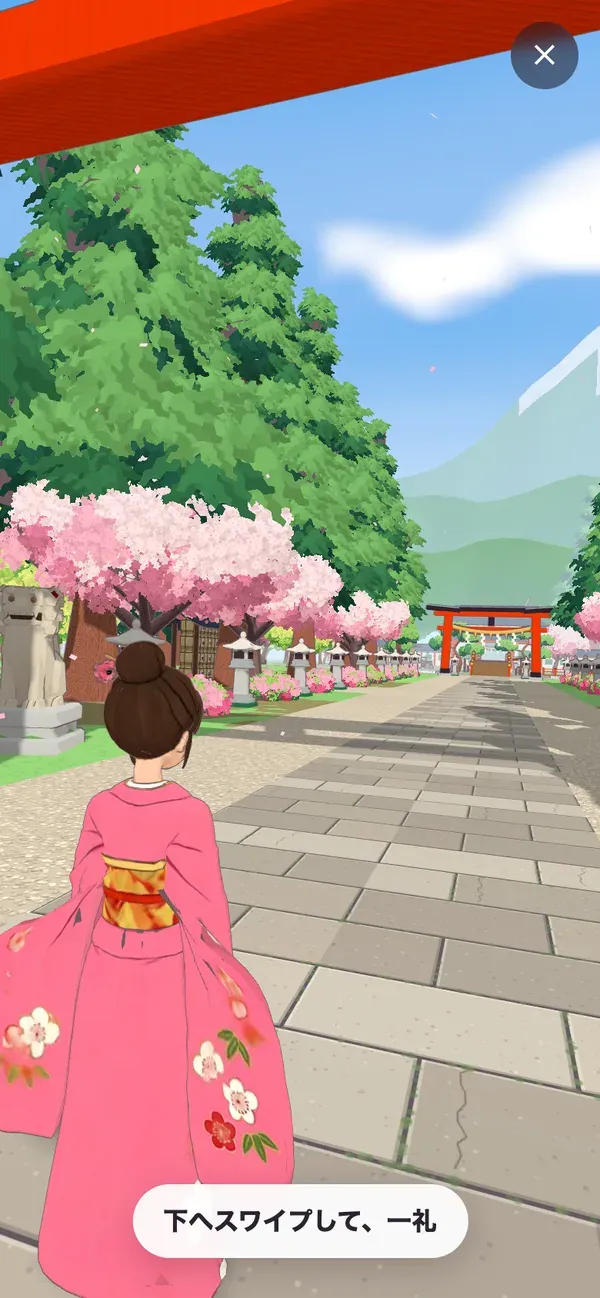
Torii
Bow once, then walk along the edge of the path.
- 2
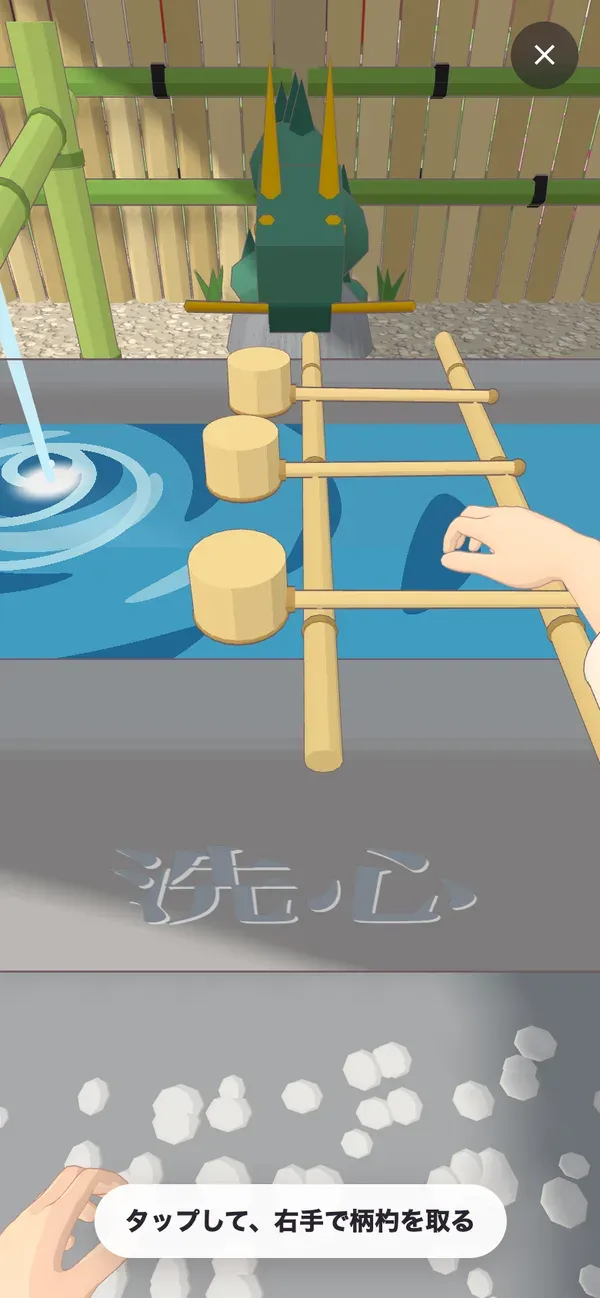
Temizu
With the ladle, rinse the left hand, the right hand, then the mouth.
- 3
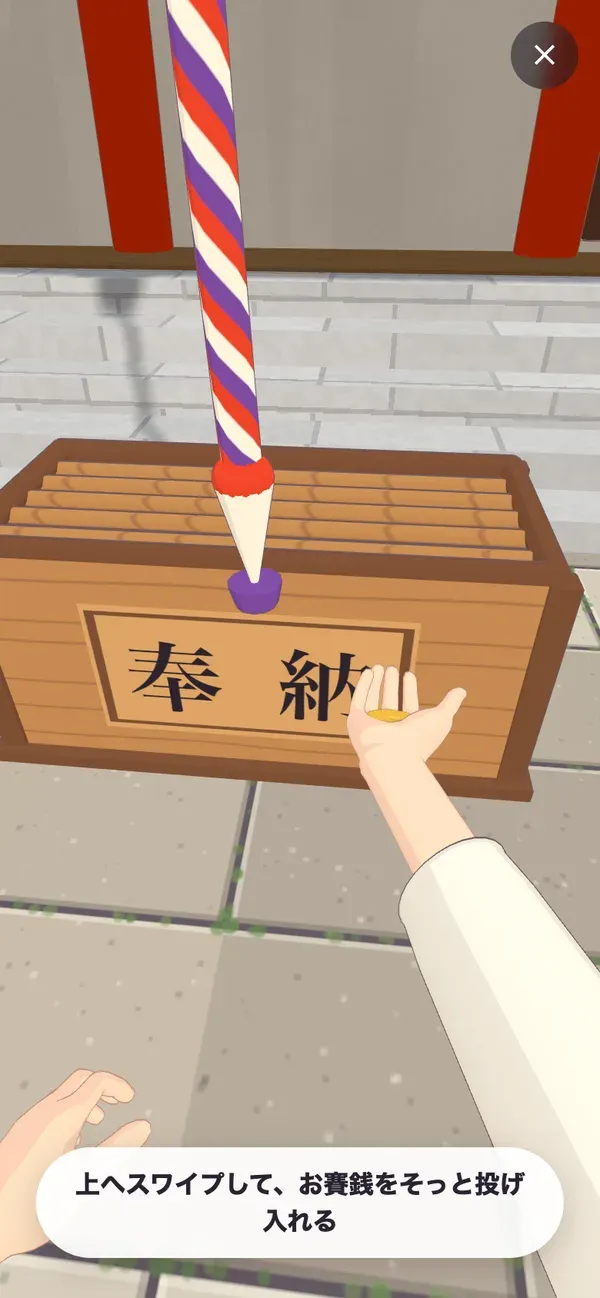
Haiden
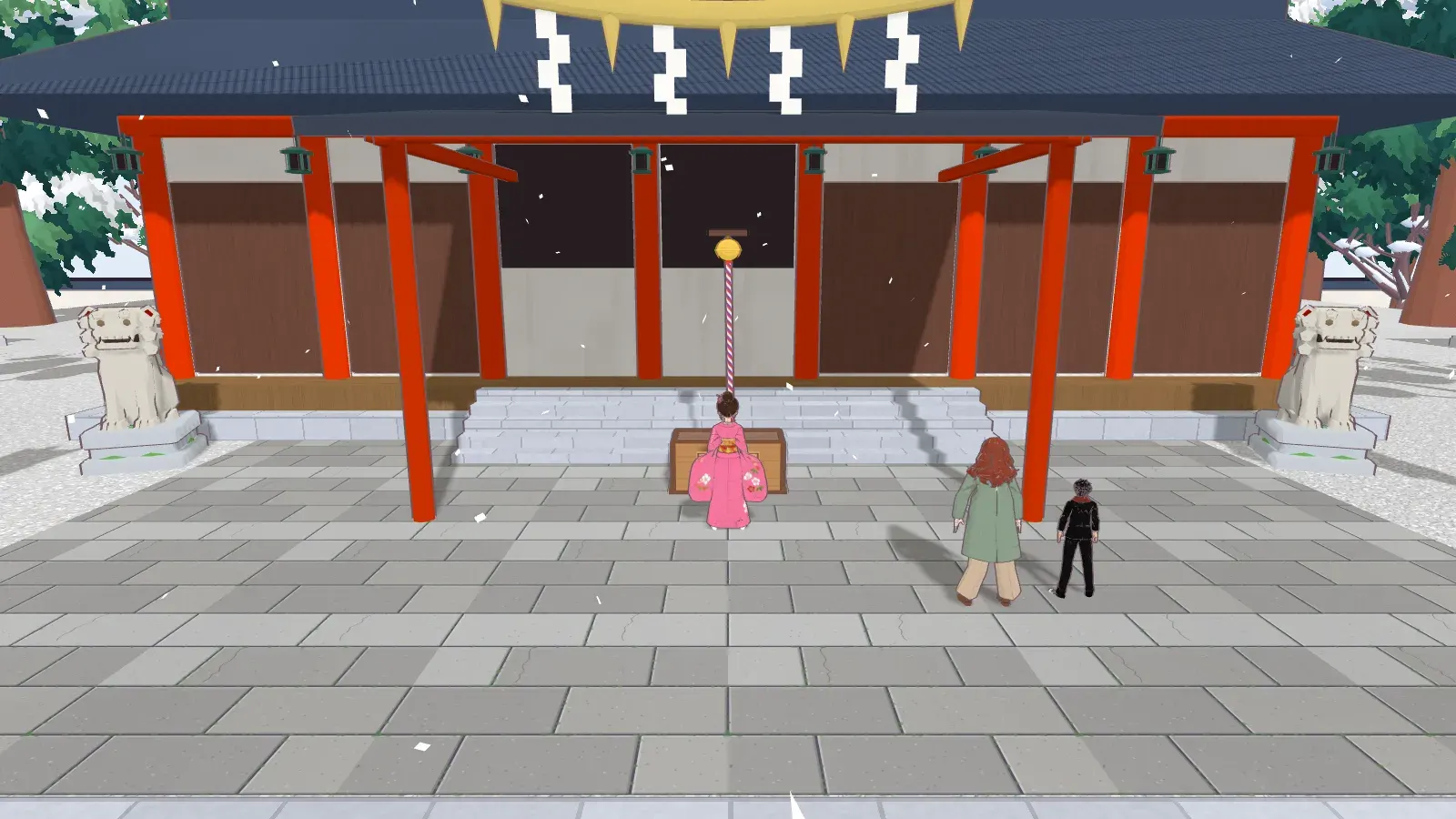
Toss a coin, ring the bell: two bows, two claps, one bow.
- 4
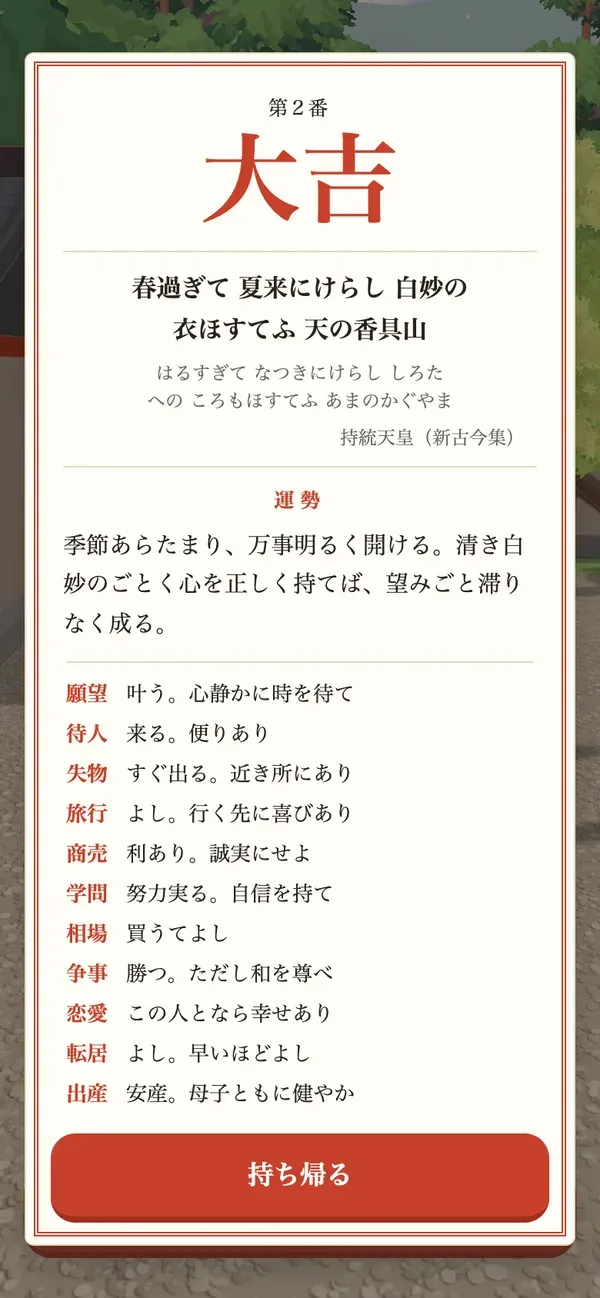
Omikuji
Shake the box for a slip, read its poem and its words, and tie it before you leave.
- 5
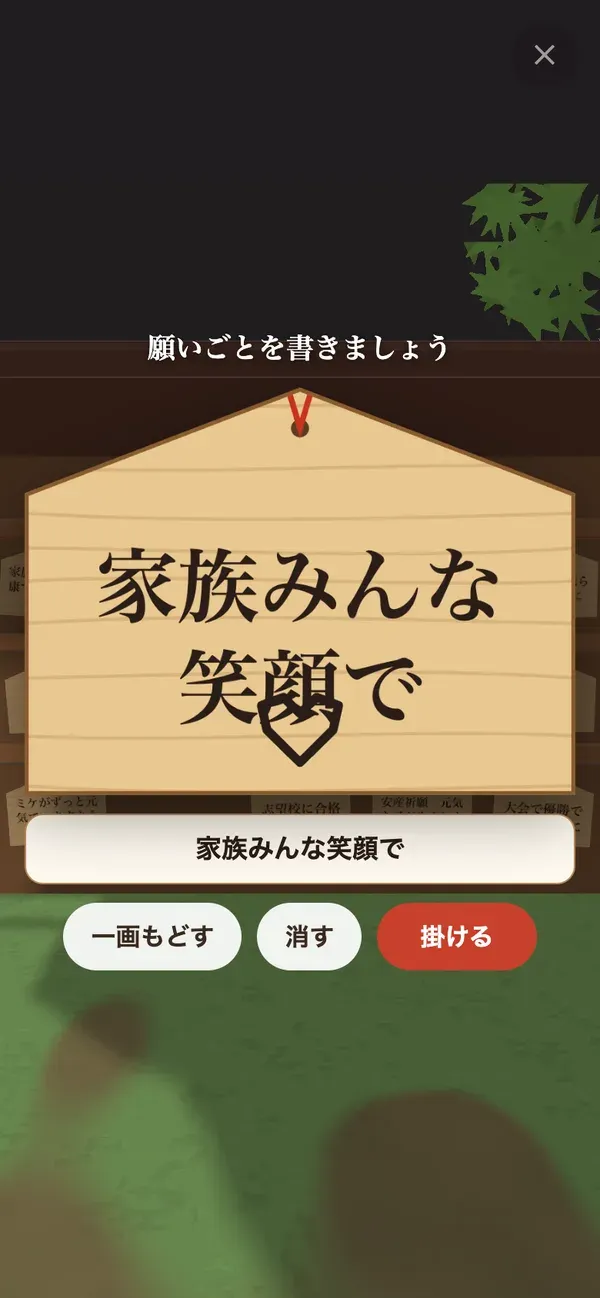
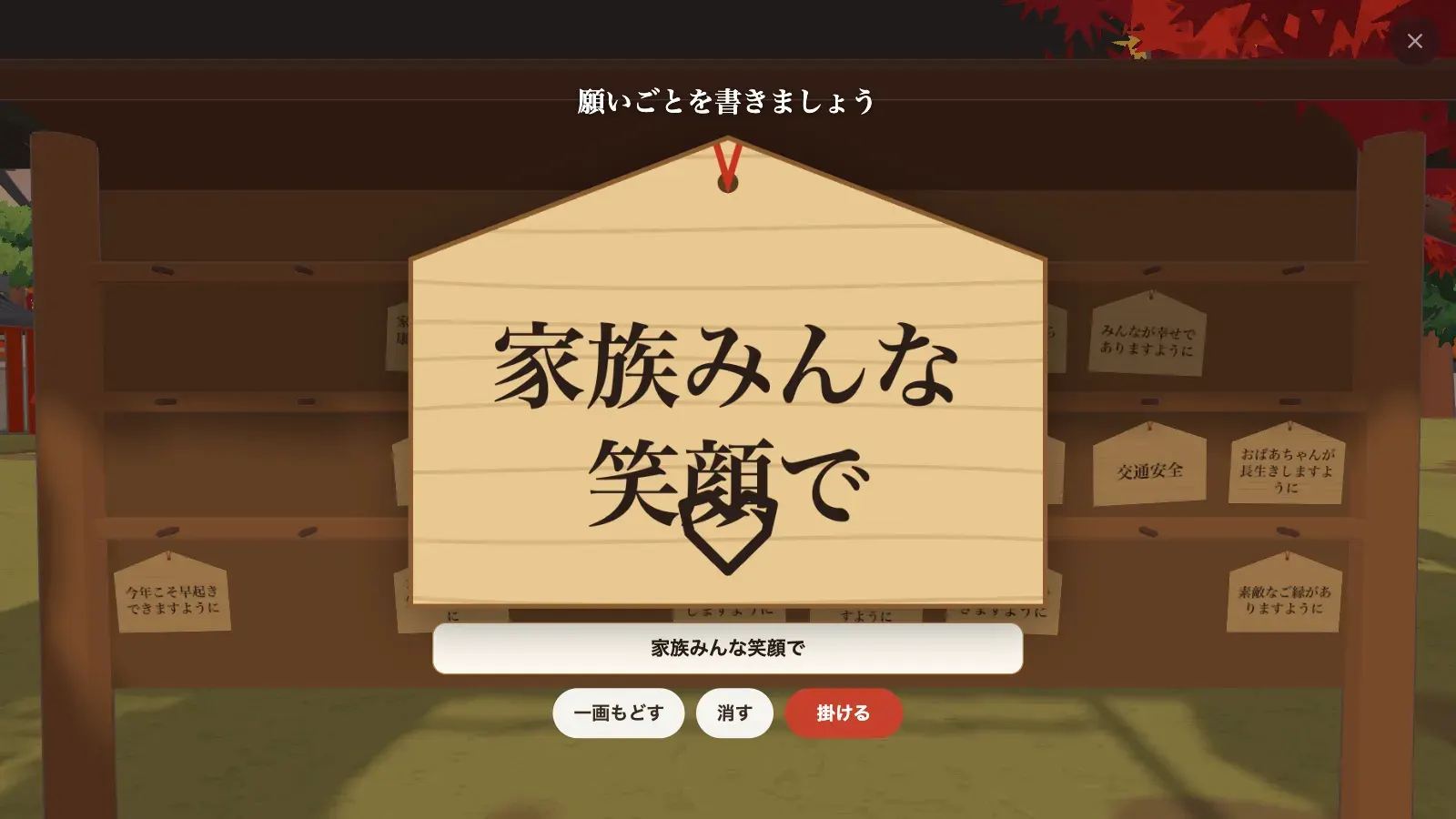
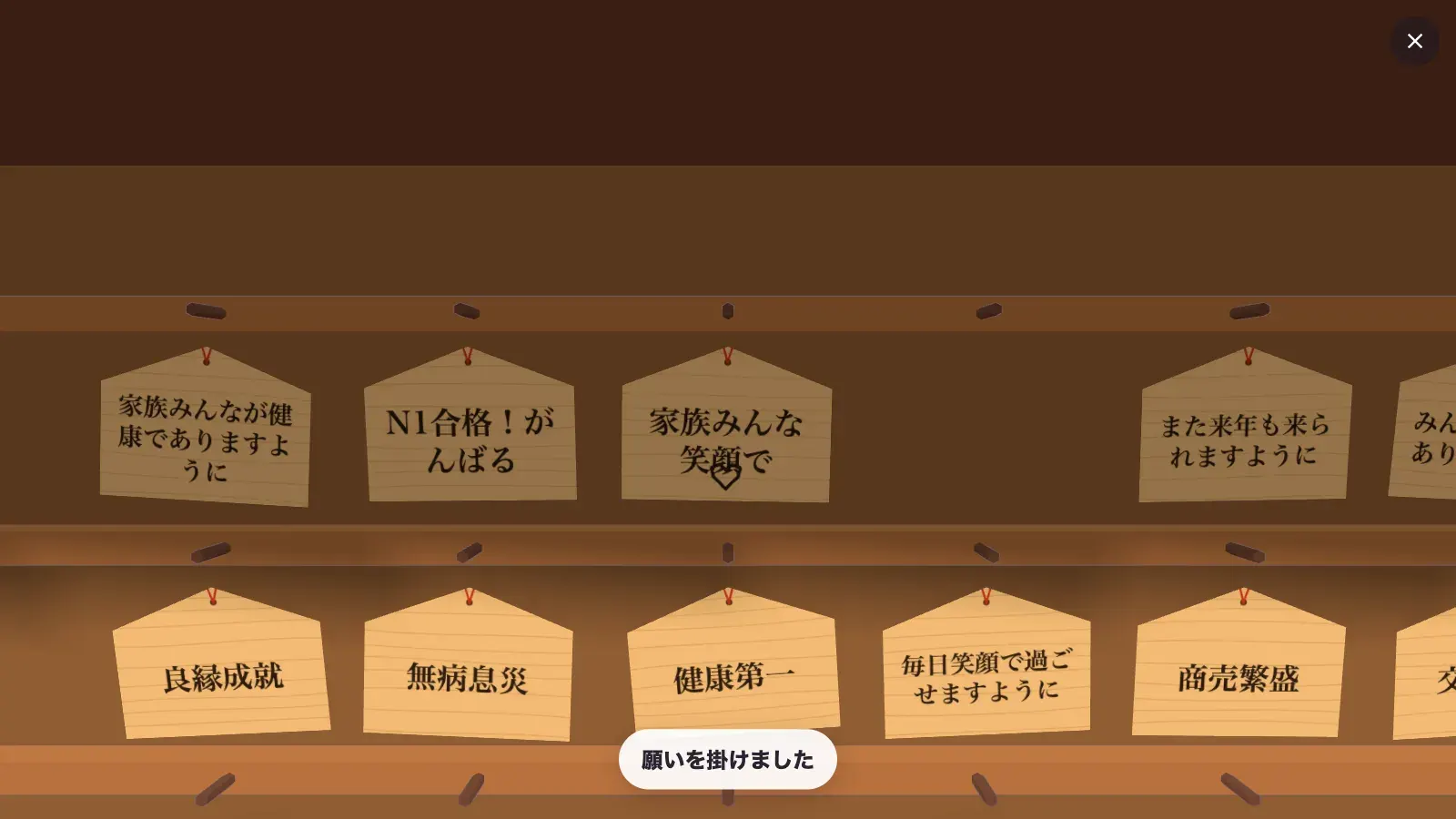
Ema
Write your wish with a brush or by typing, and hang it where you like.
Wide grounds
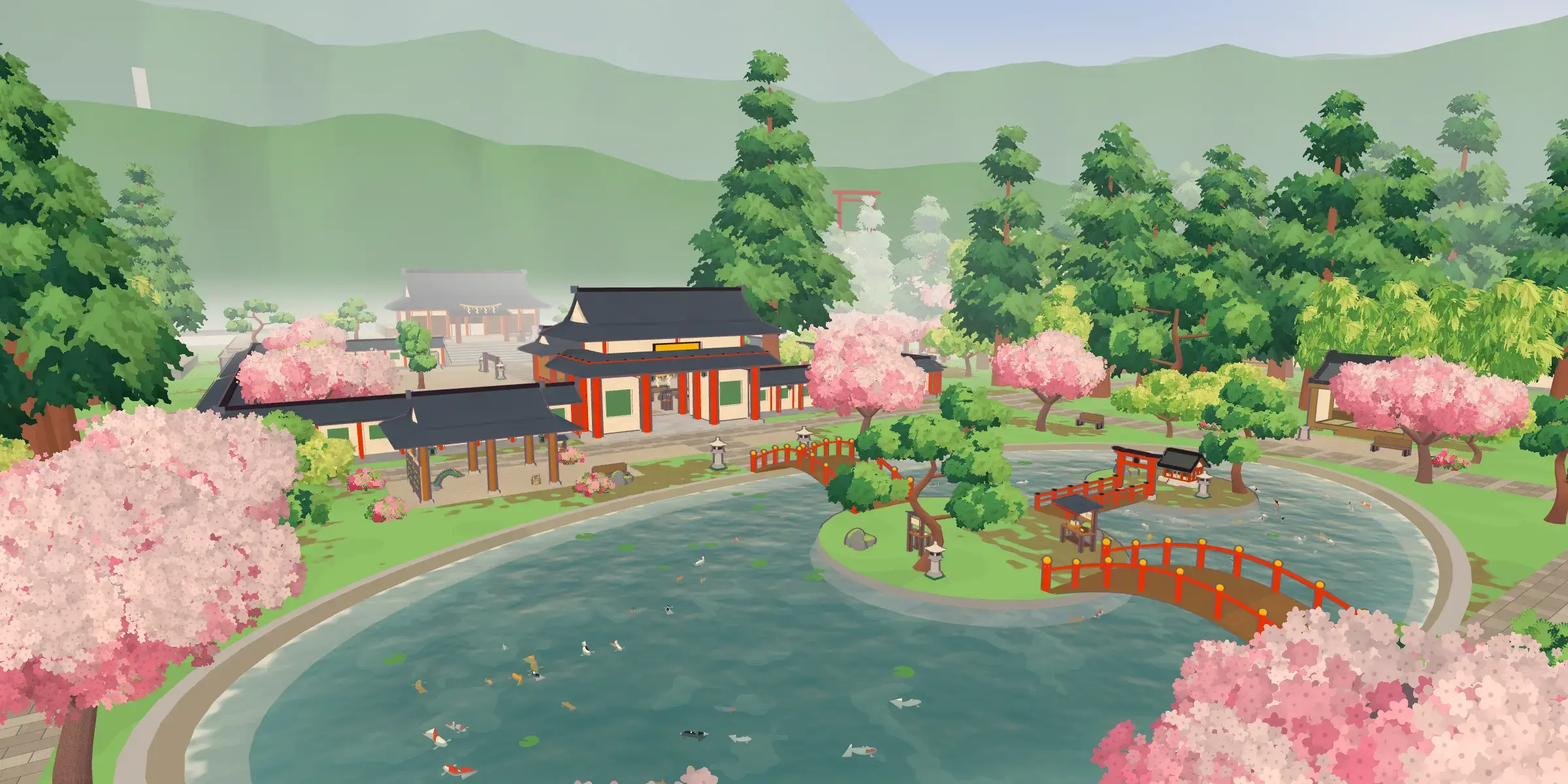
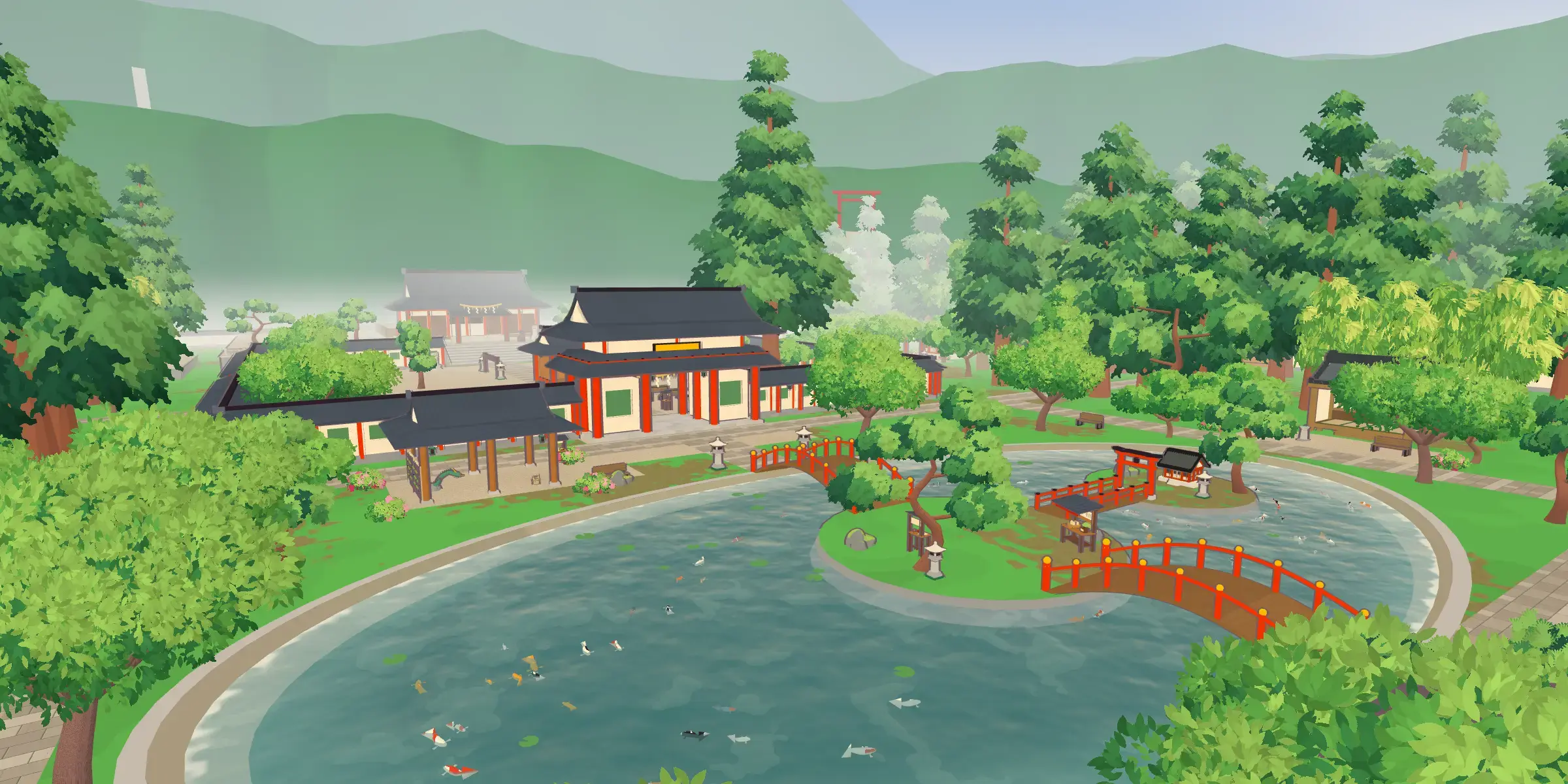
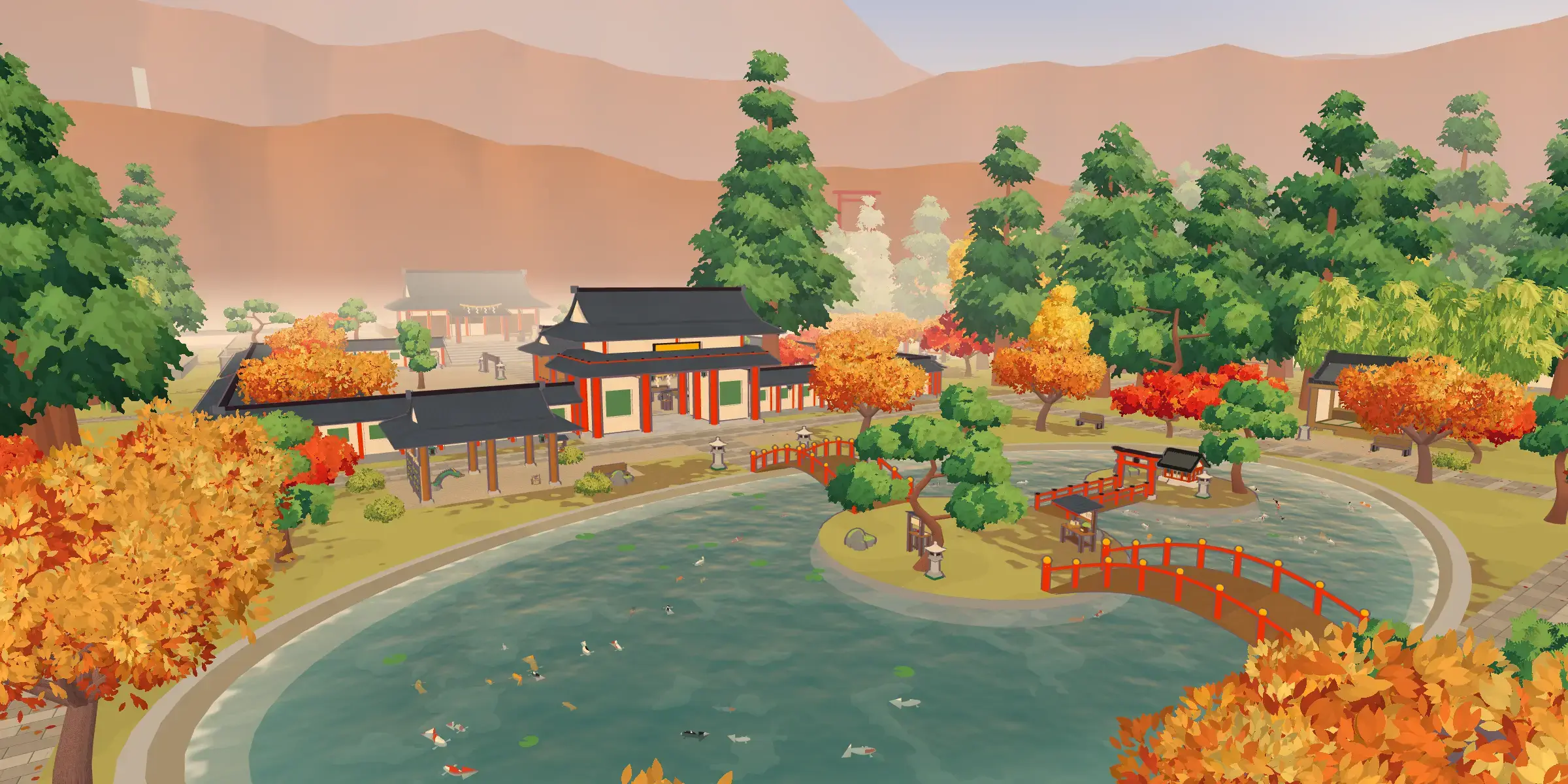
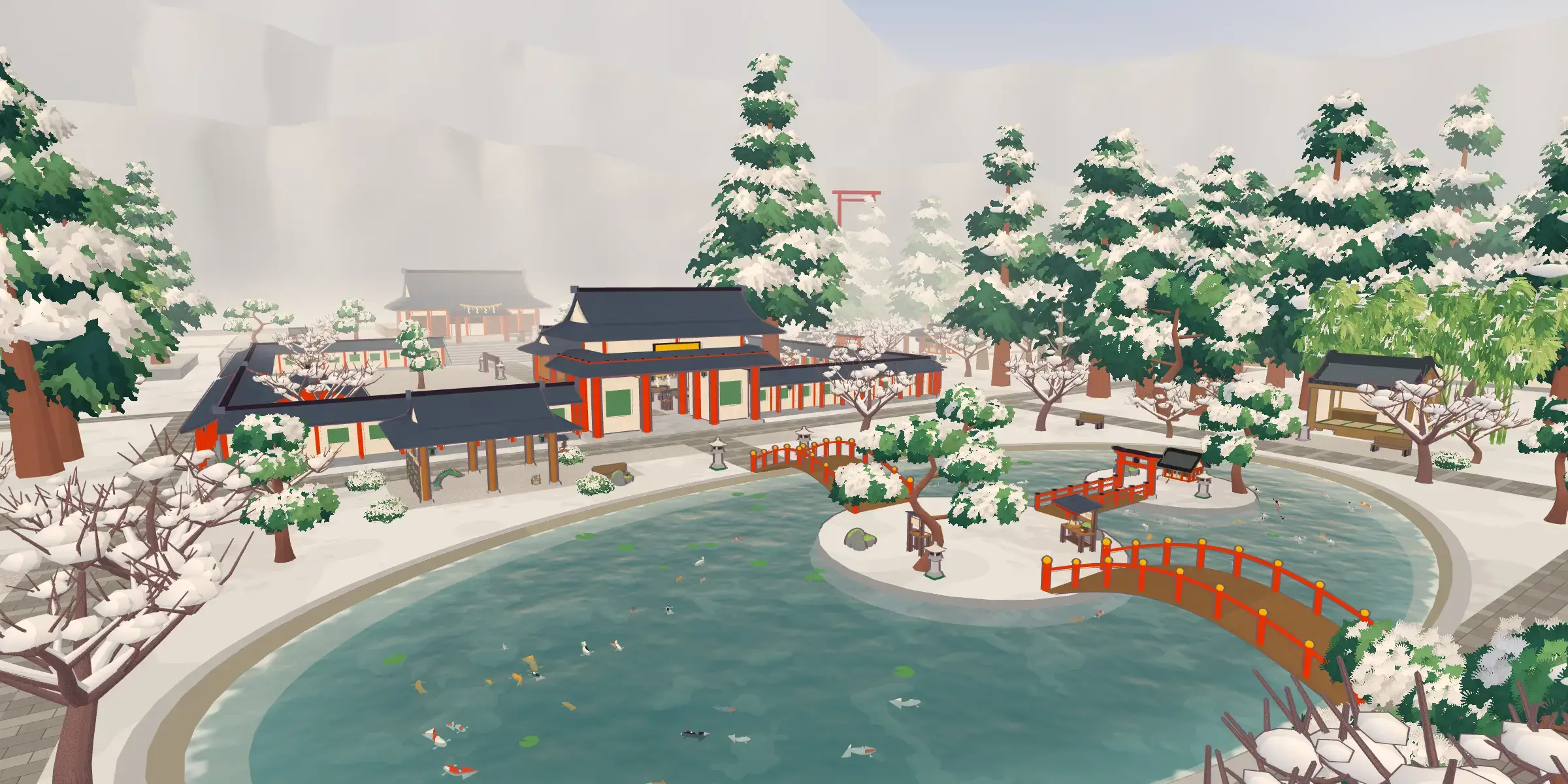
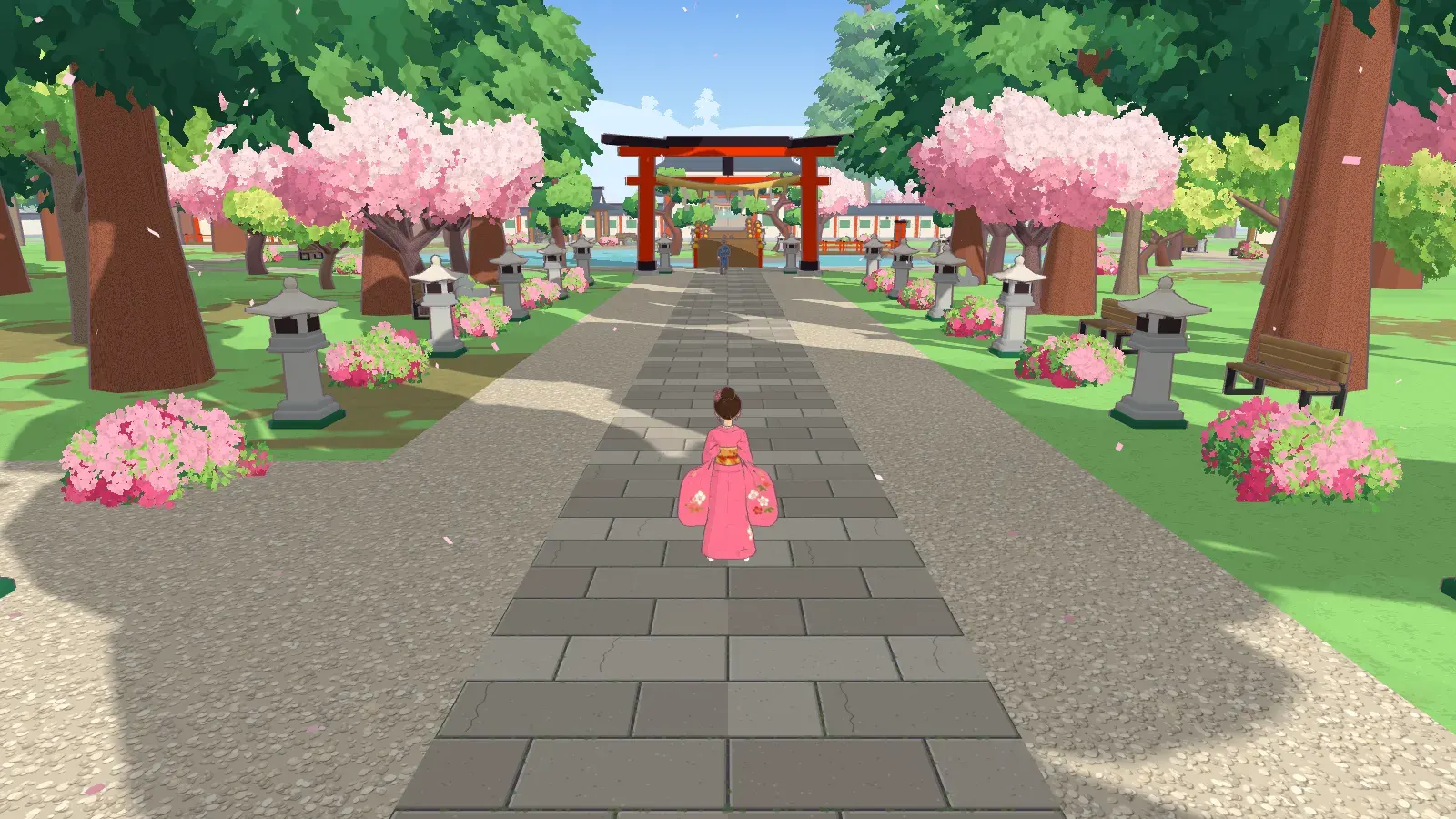
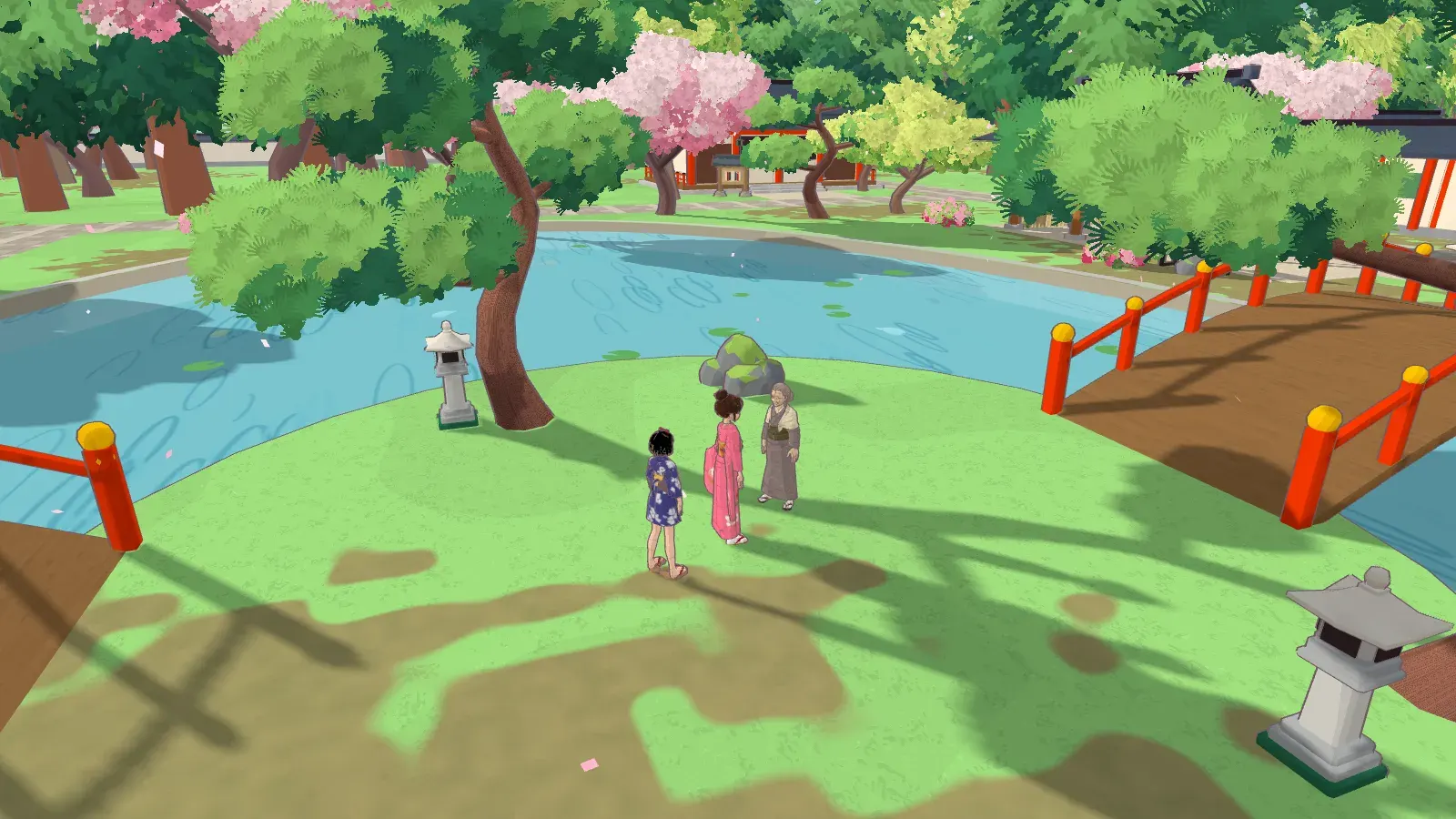
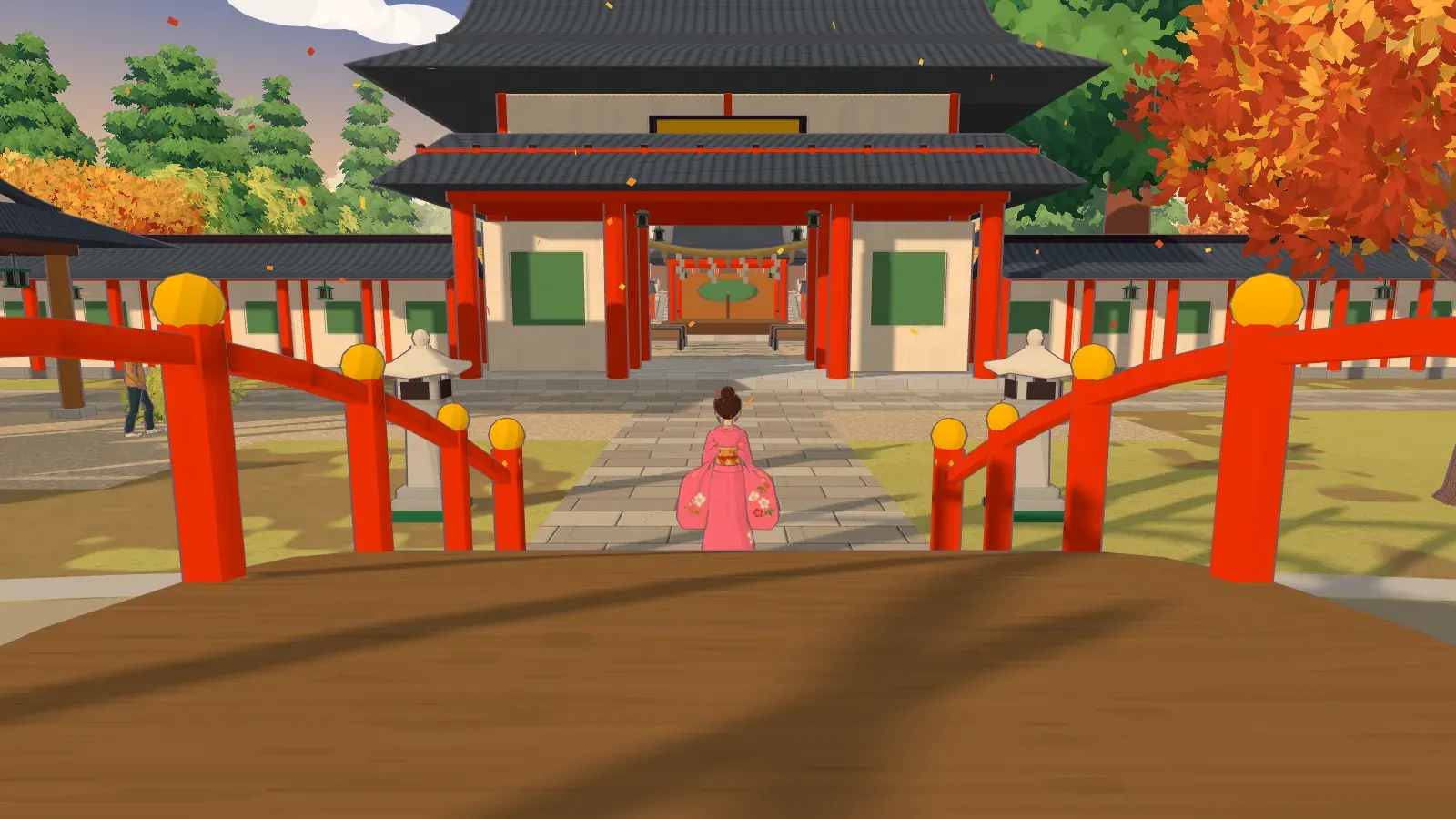
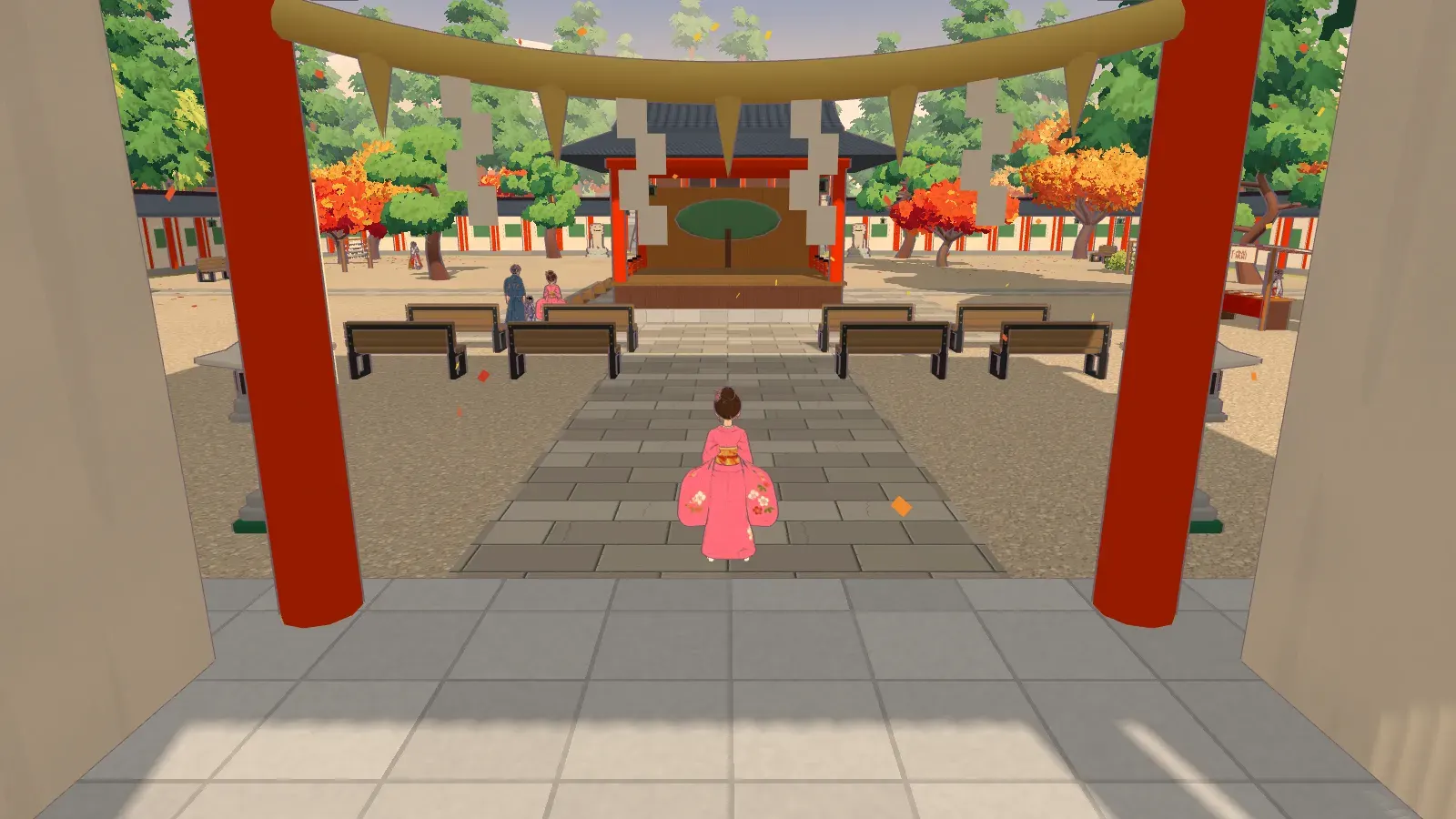
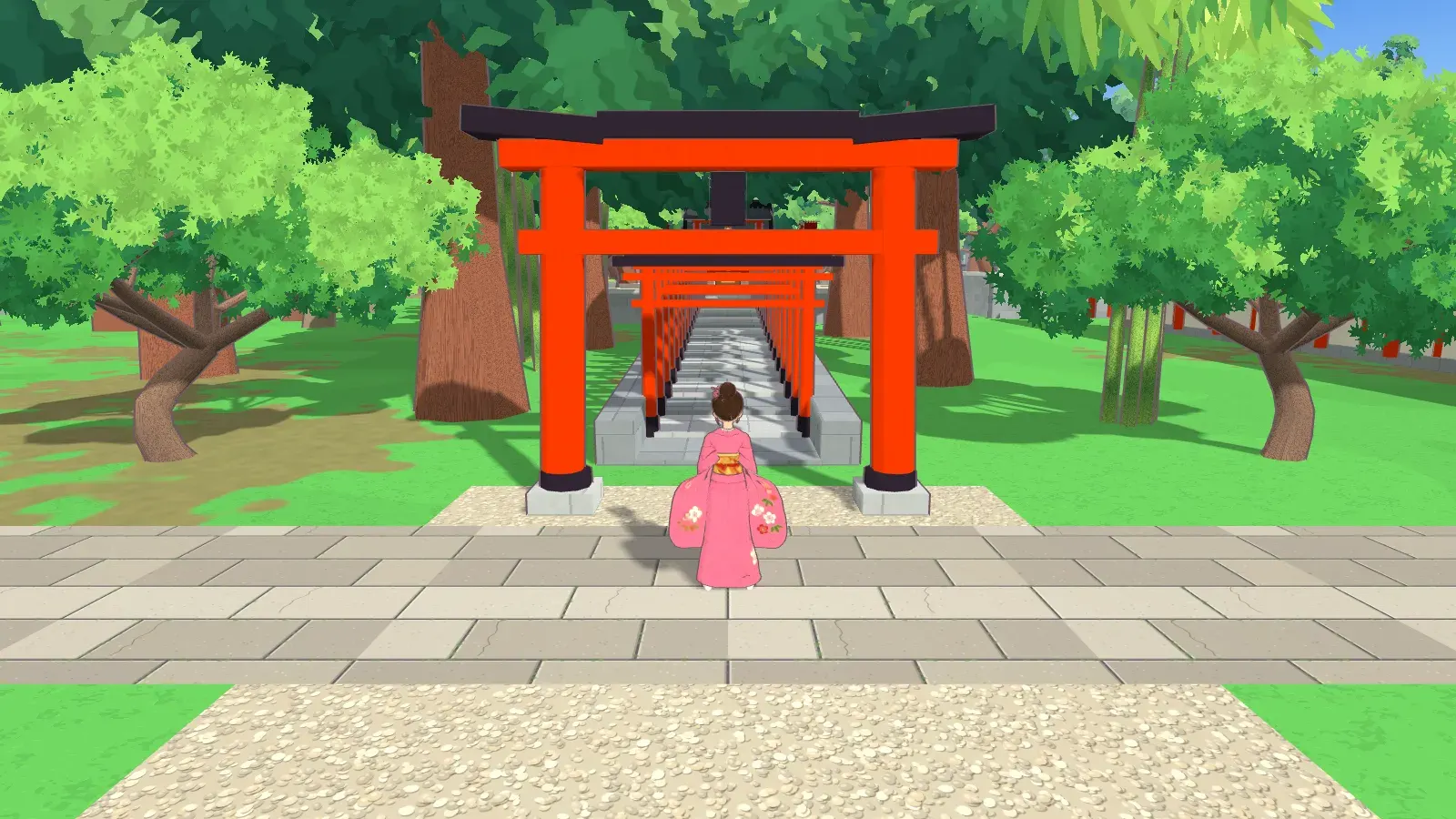
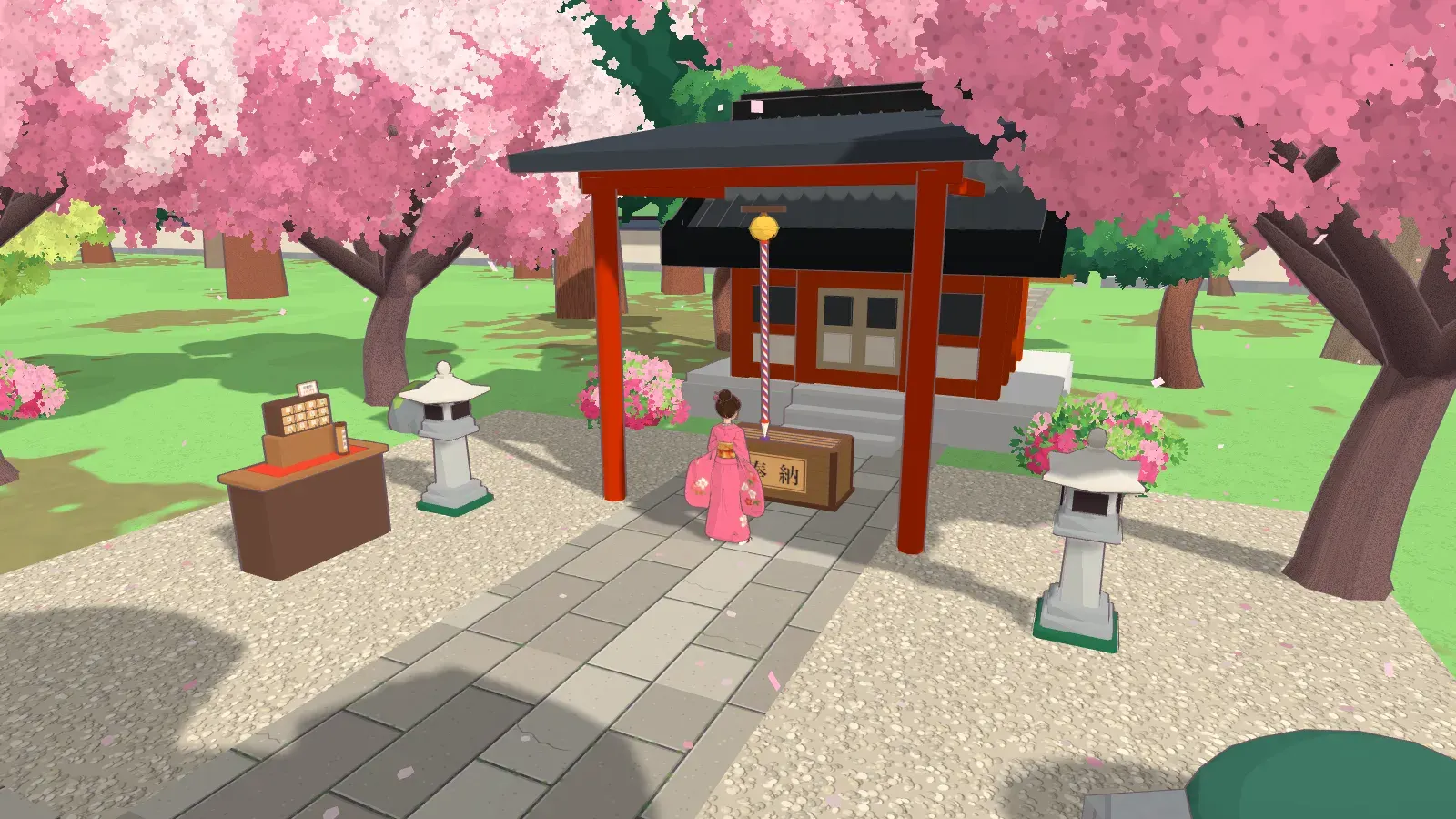
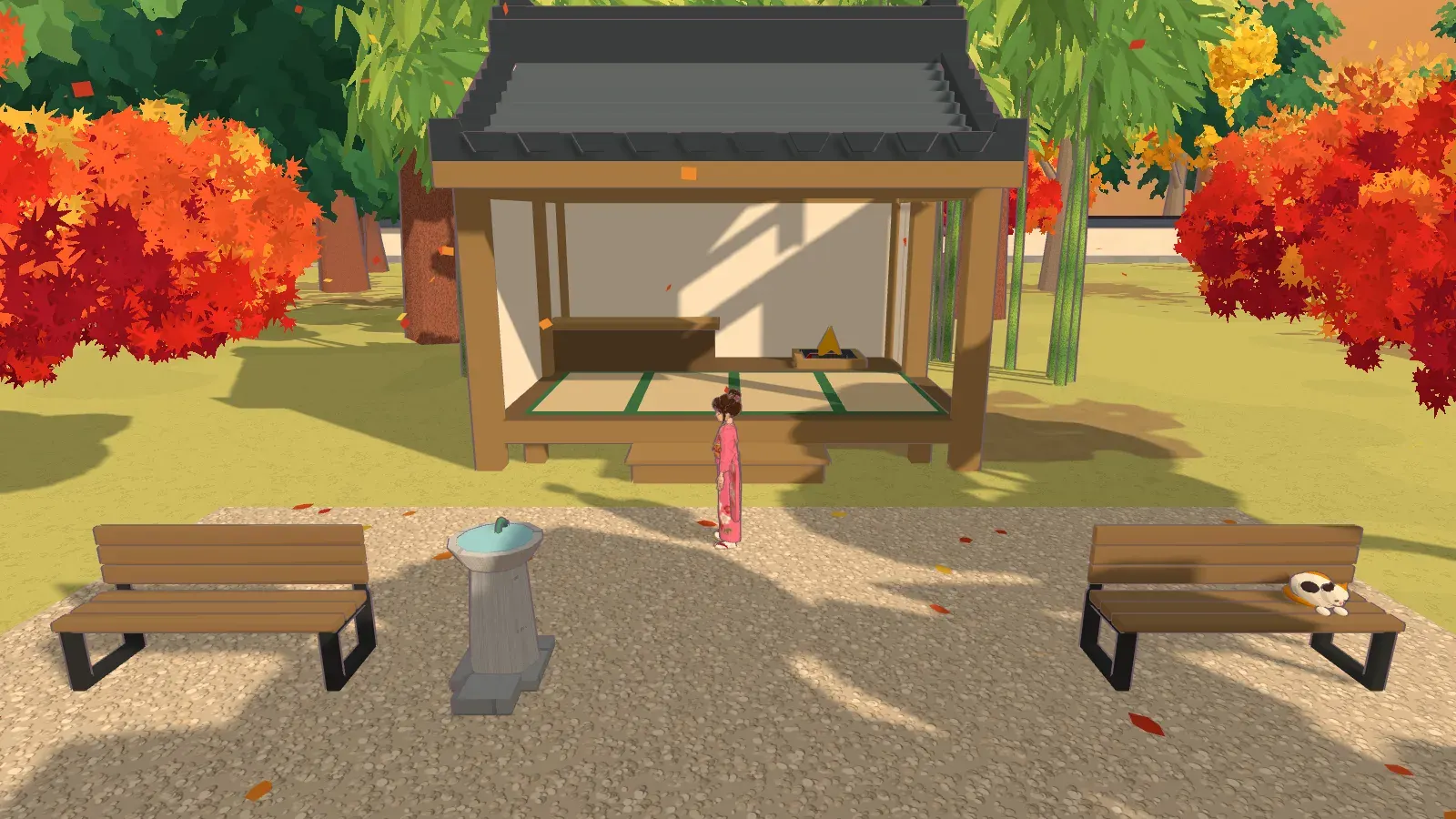
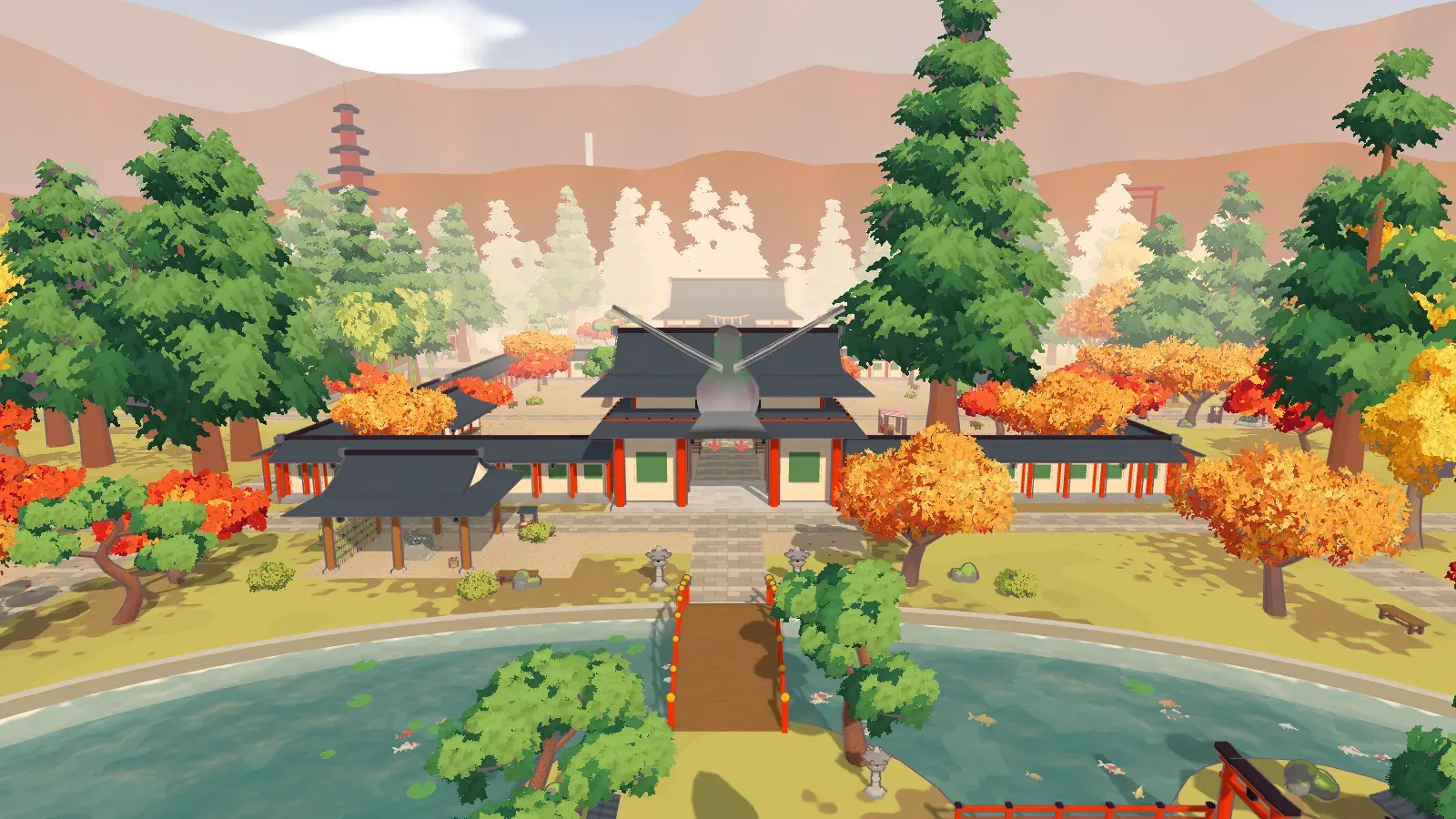
A long approach, a pond with a drum bridge, a two-storey gate and a cloistered court, the kagura stage, the hall up the stone steps, the Inari shrine through a tunnel of torii, the Tenjin shrine among plum trees, and a fair with stalls. A walk round takes over ten minutes.
From morning to night
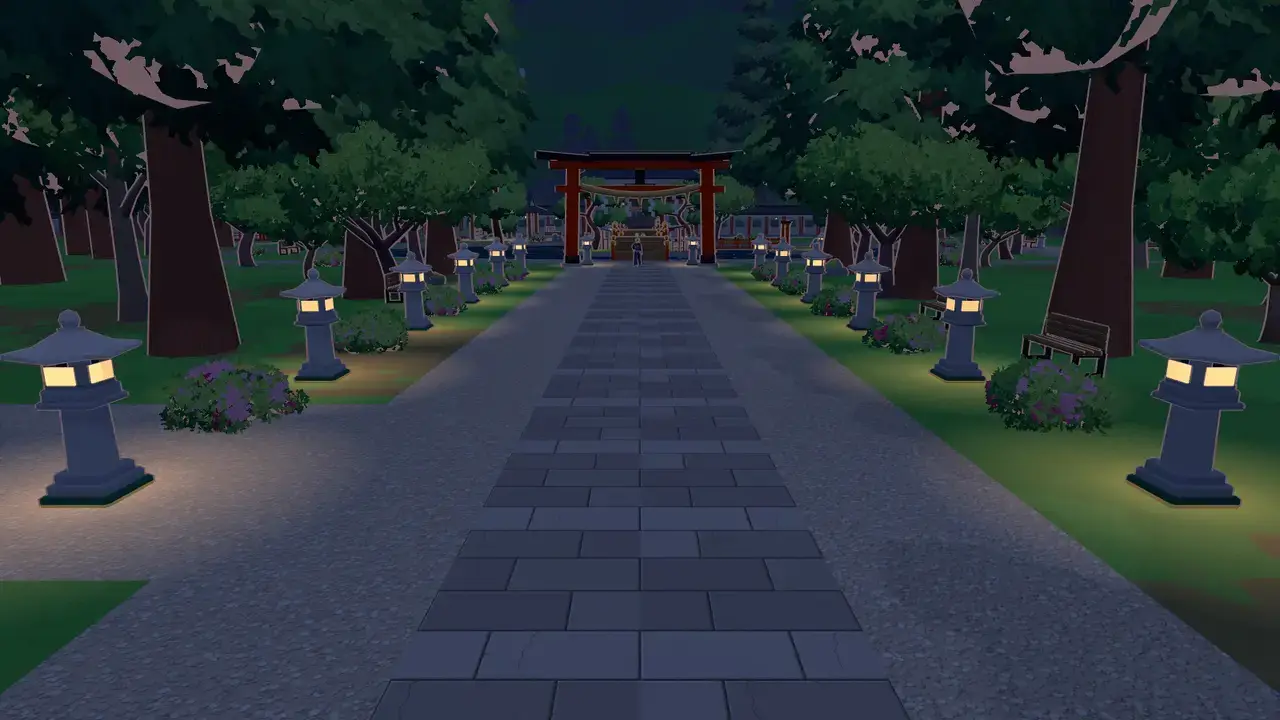
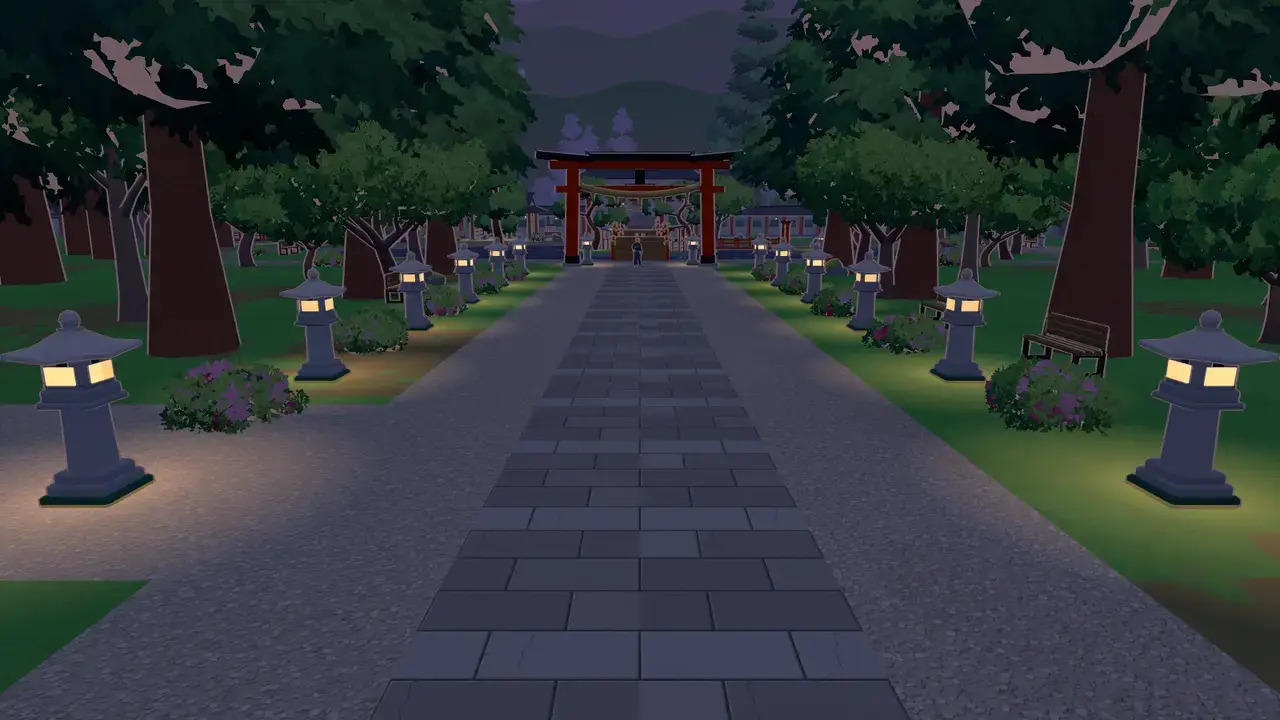
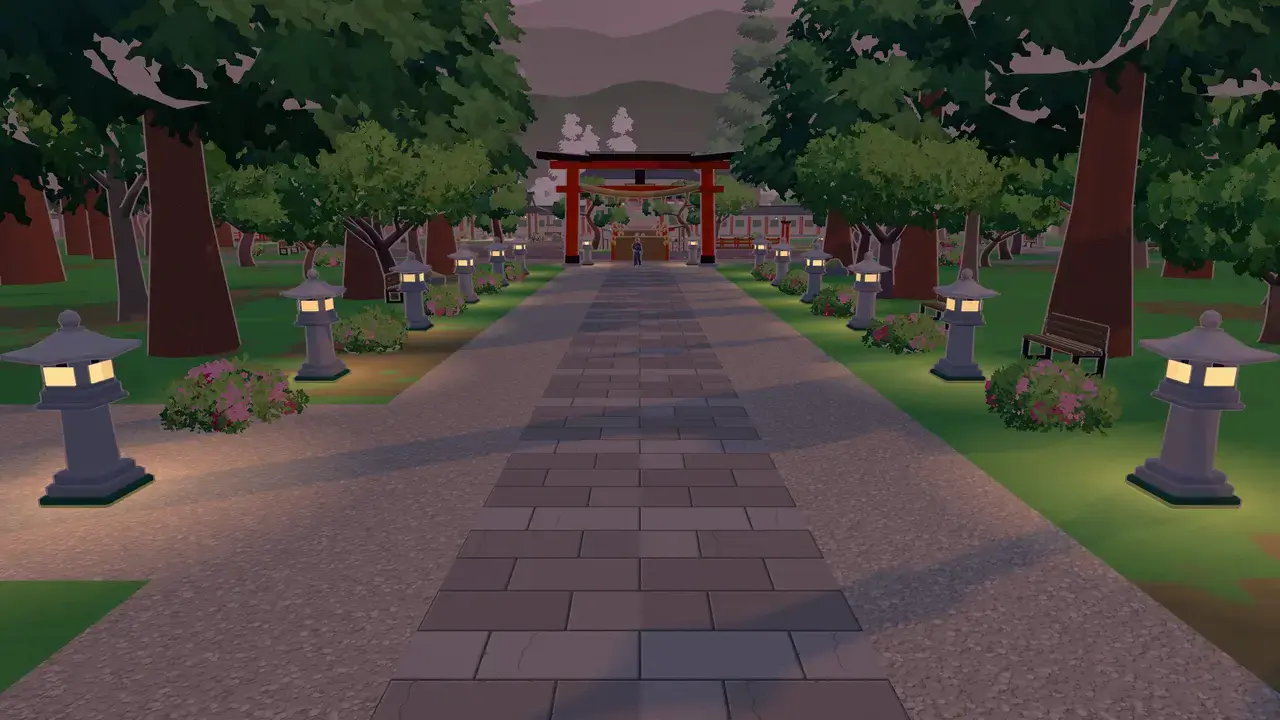
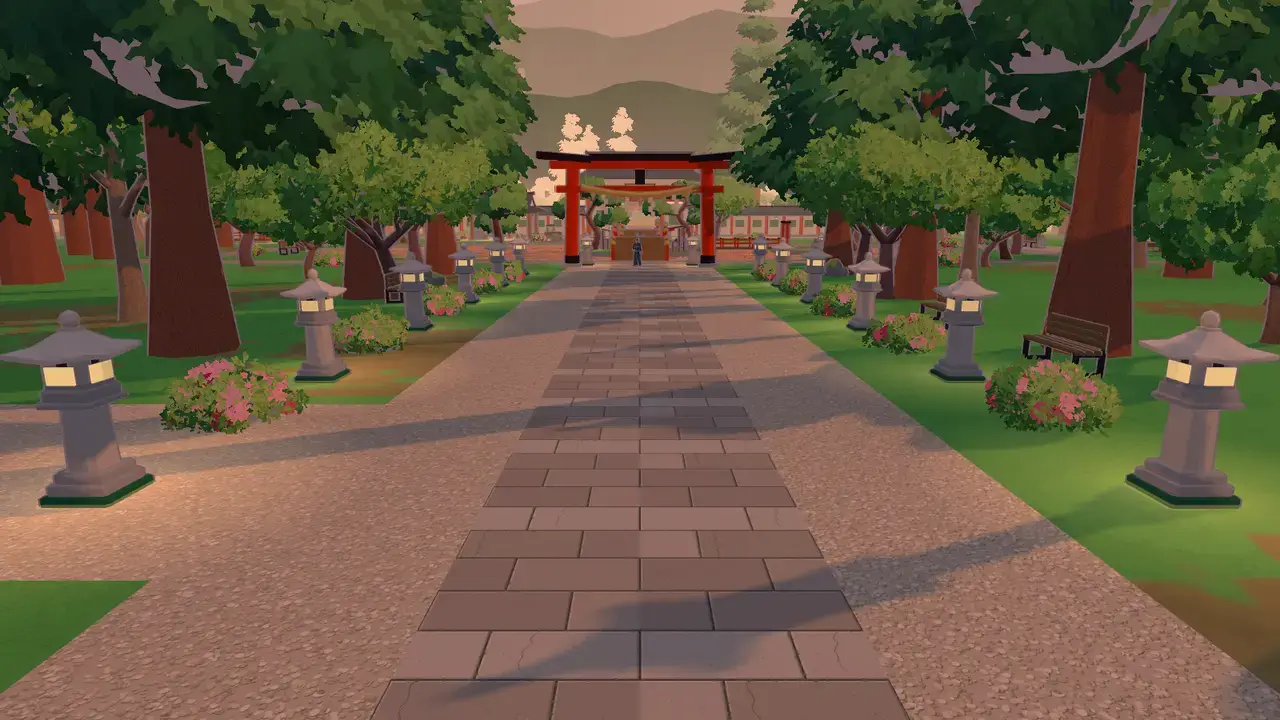
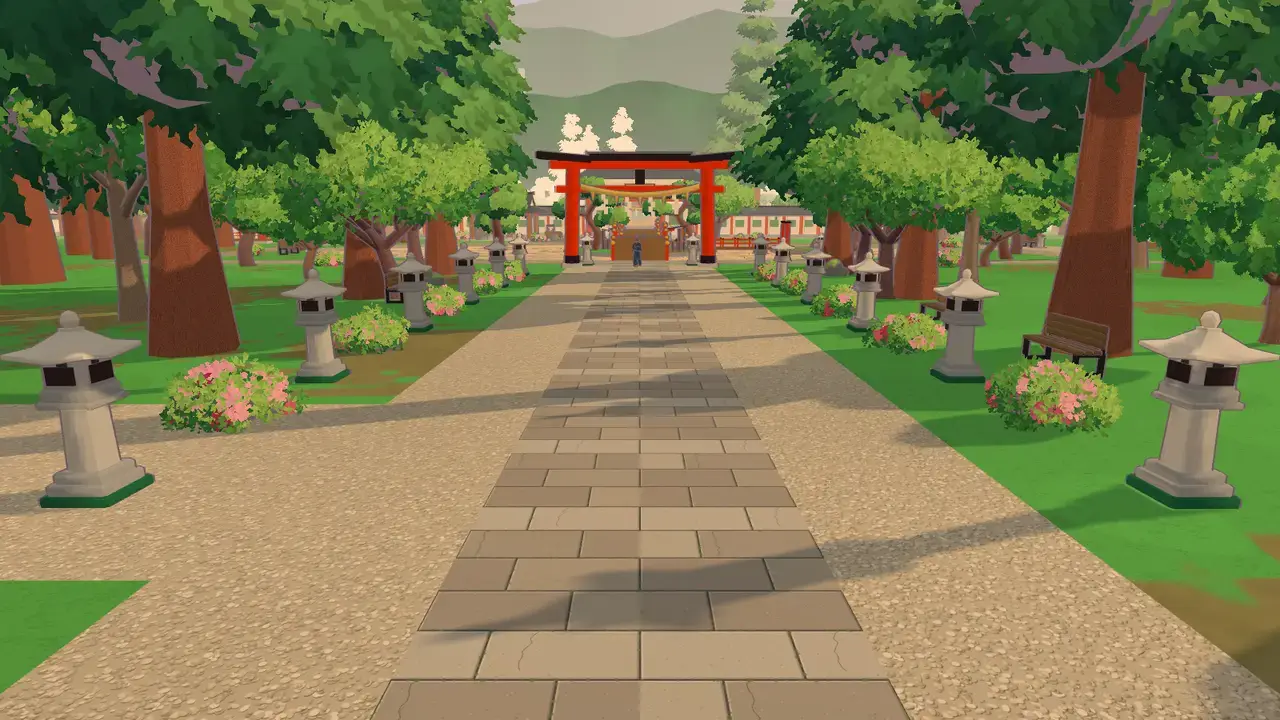
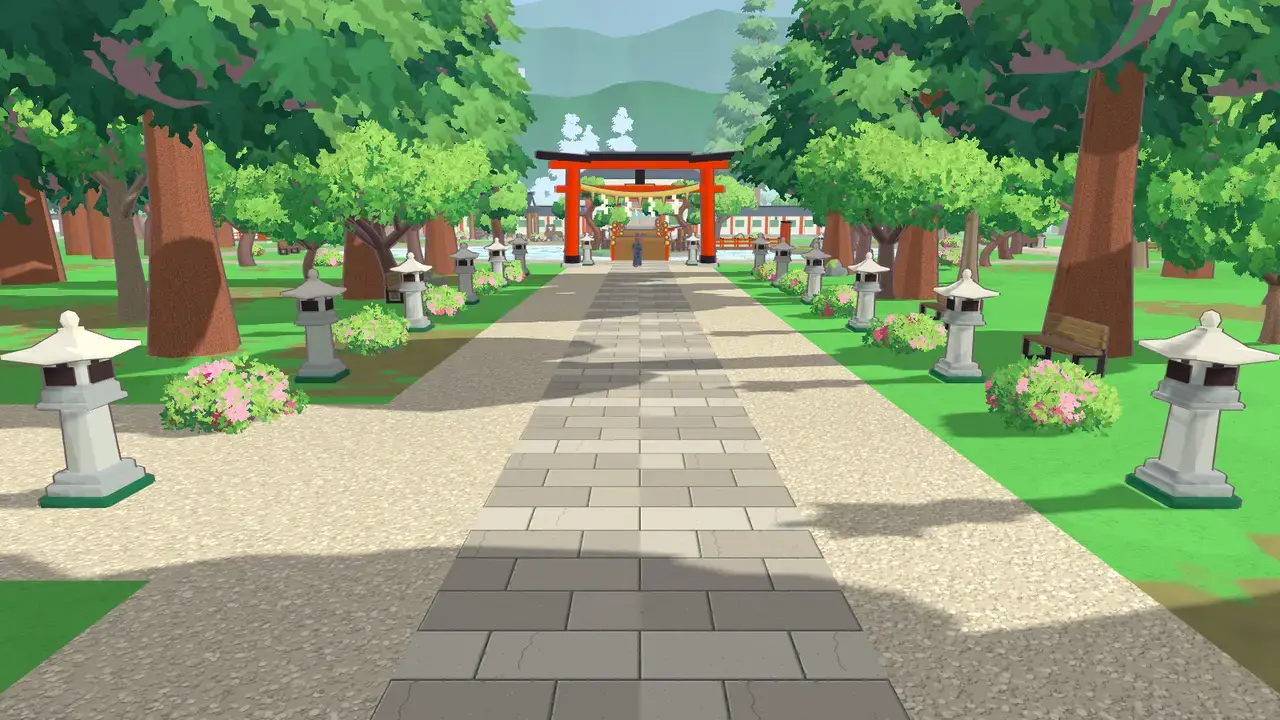
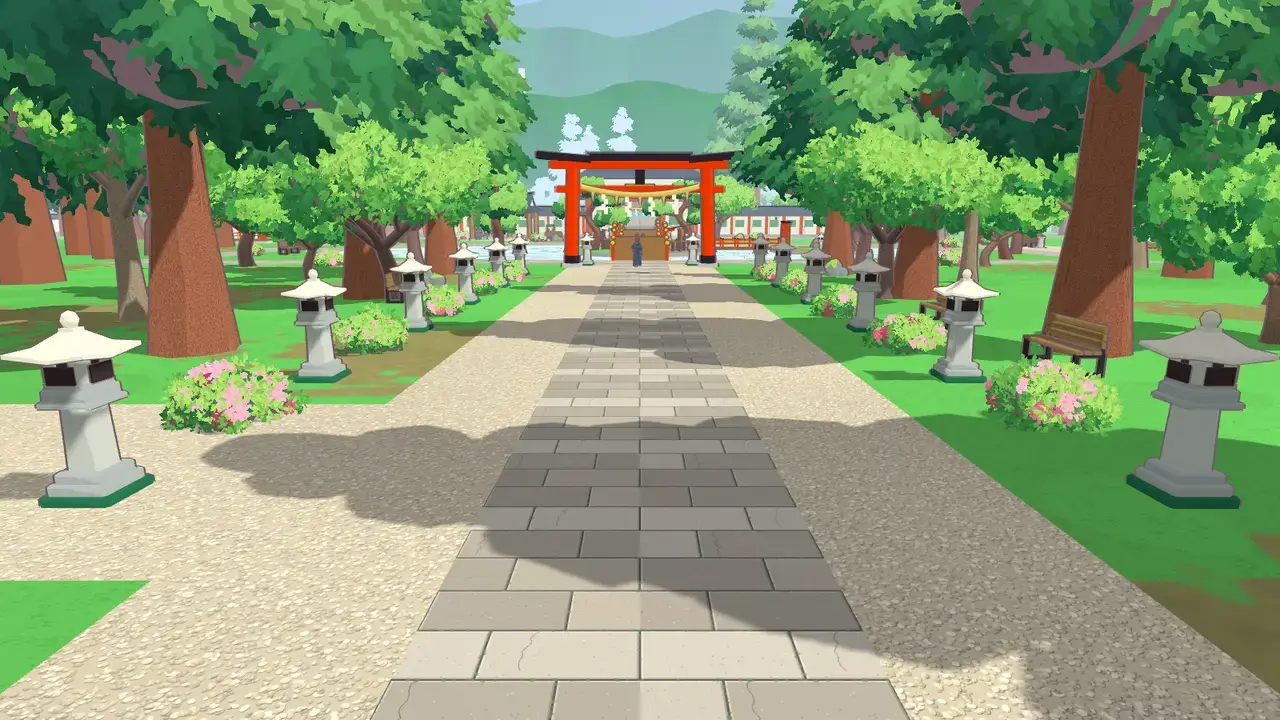
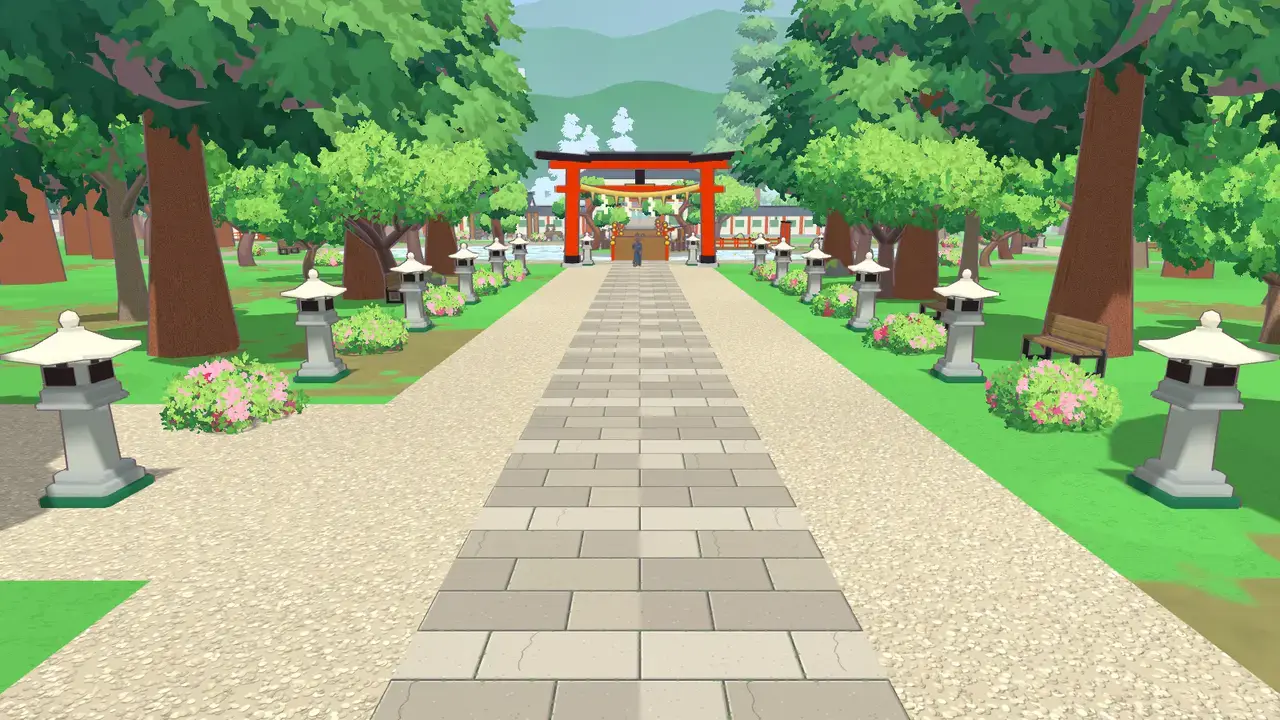
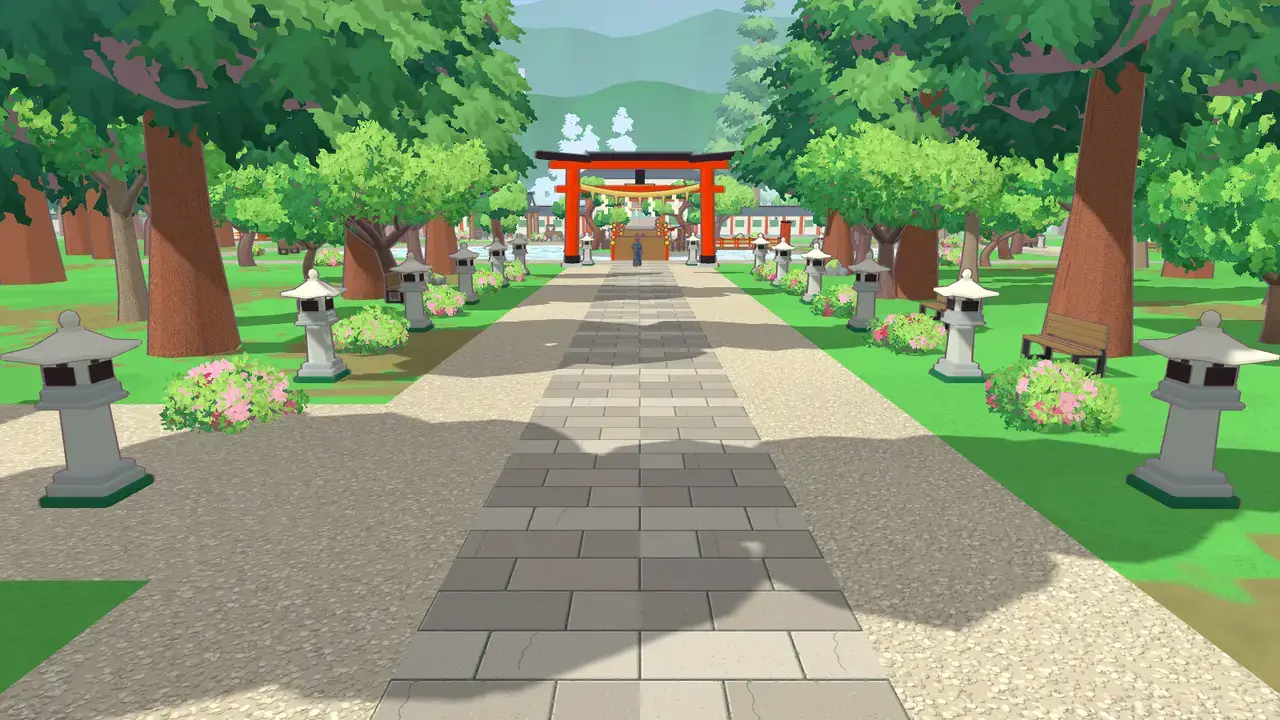
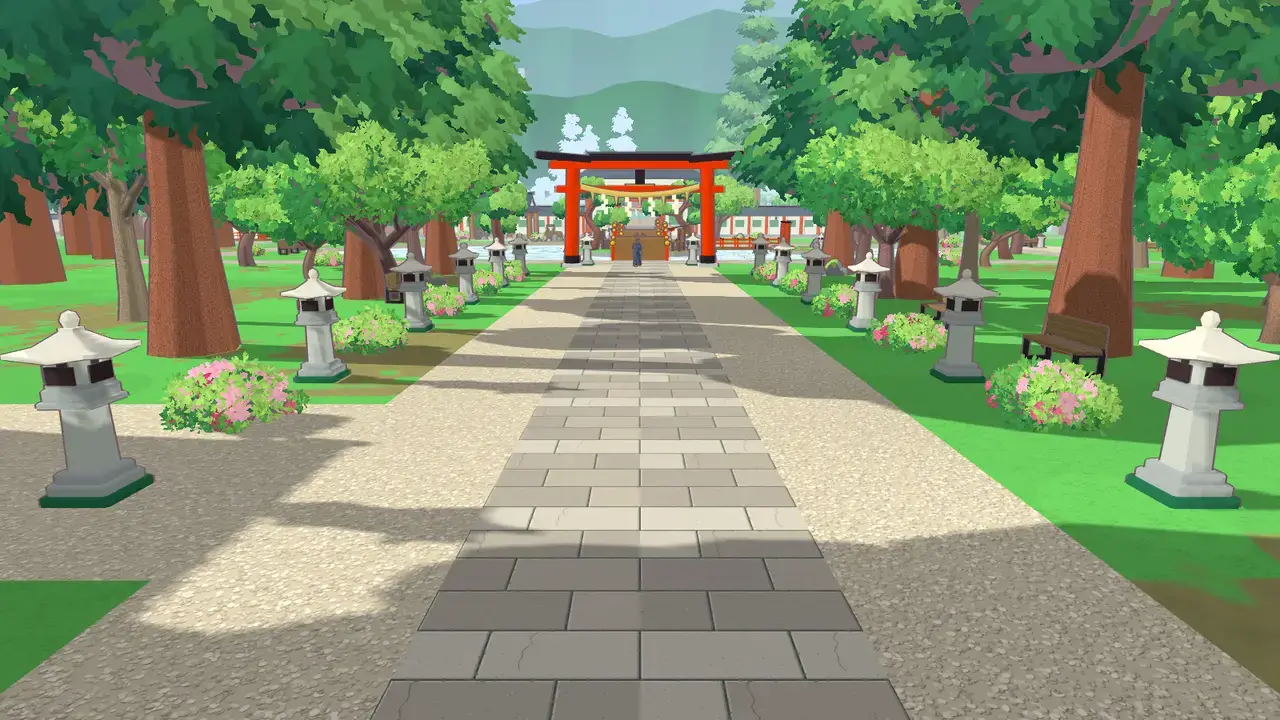
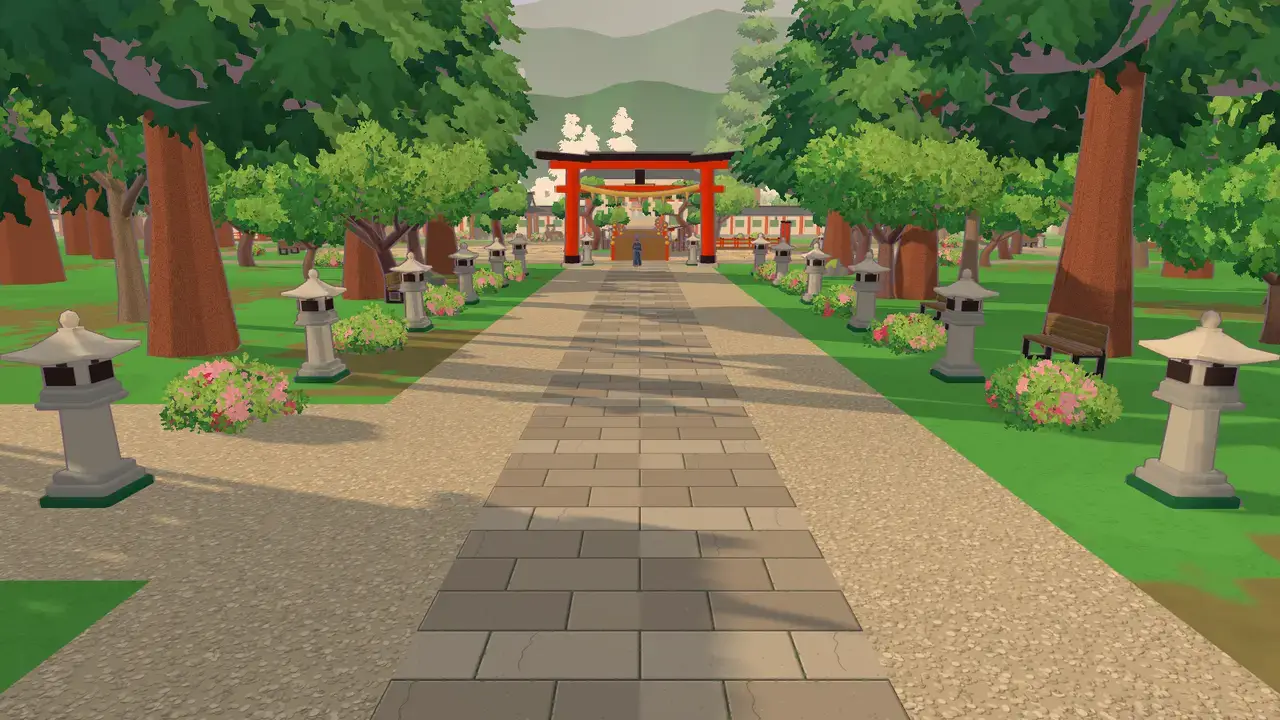
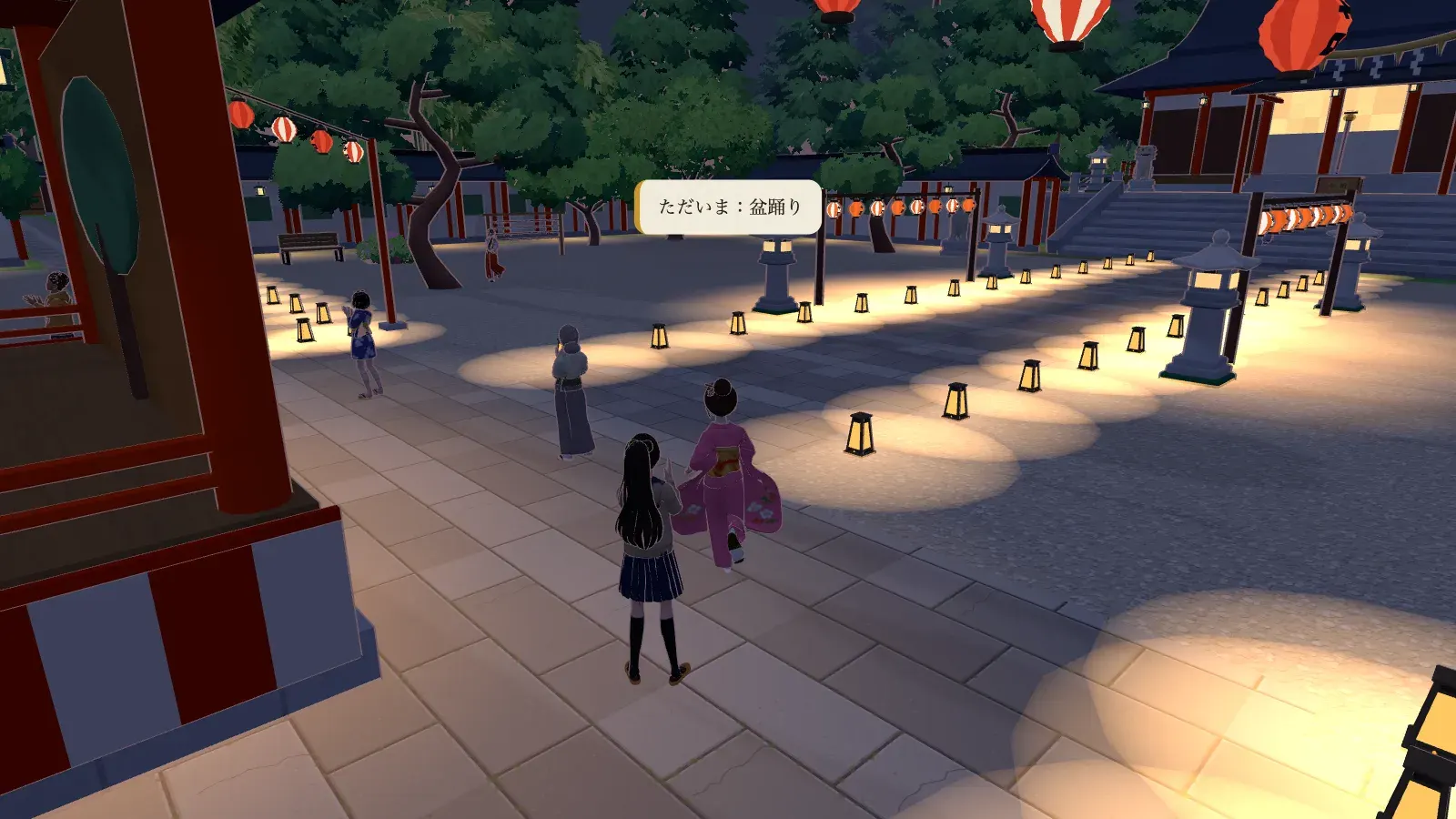
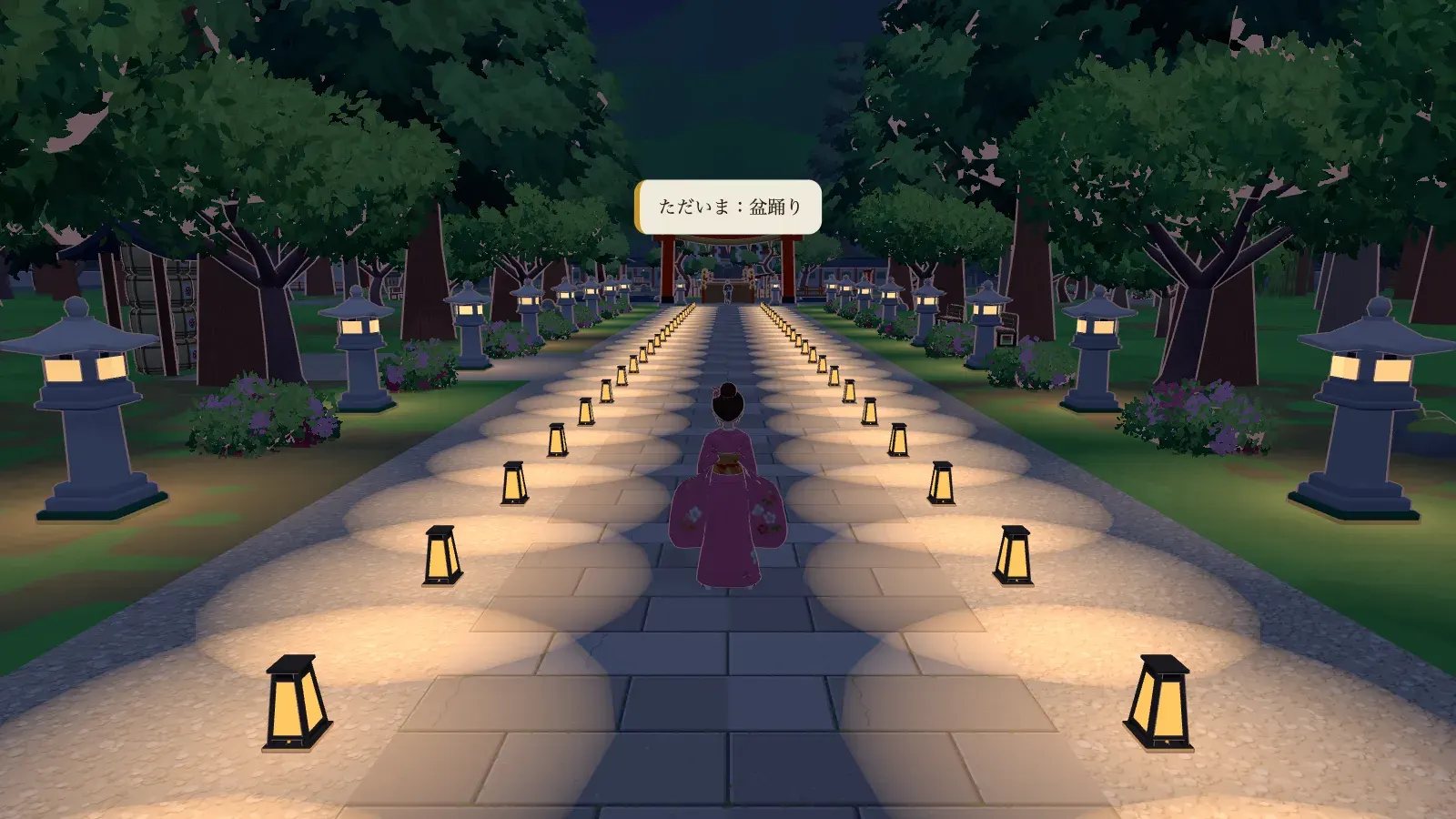
The shrine keeps the time it is in Japan now: the glow of dawn, the light of noon, dusk, and night with the lanterns lit. You can also choose an hour to walk in. After dark the fire watch makes his rounds with a lantern.
The pictures below are of one summer day; sunrise and sunset move with the seasons.
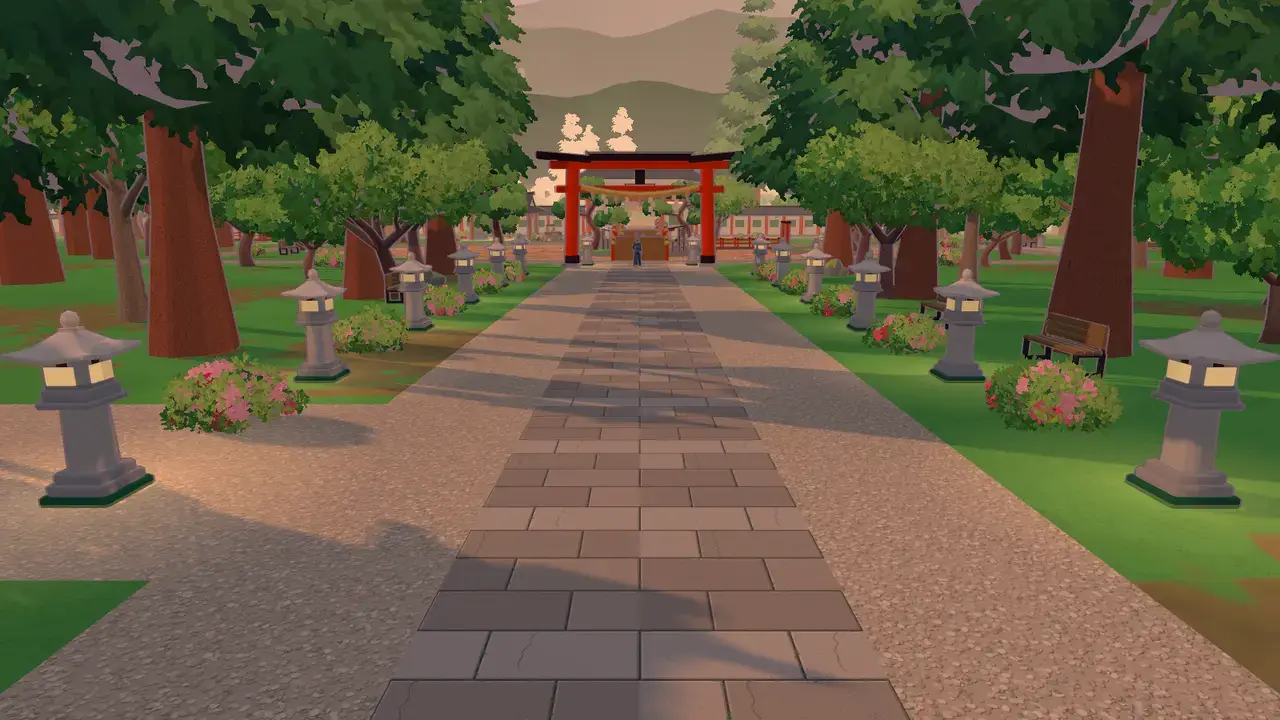
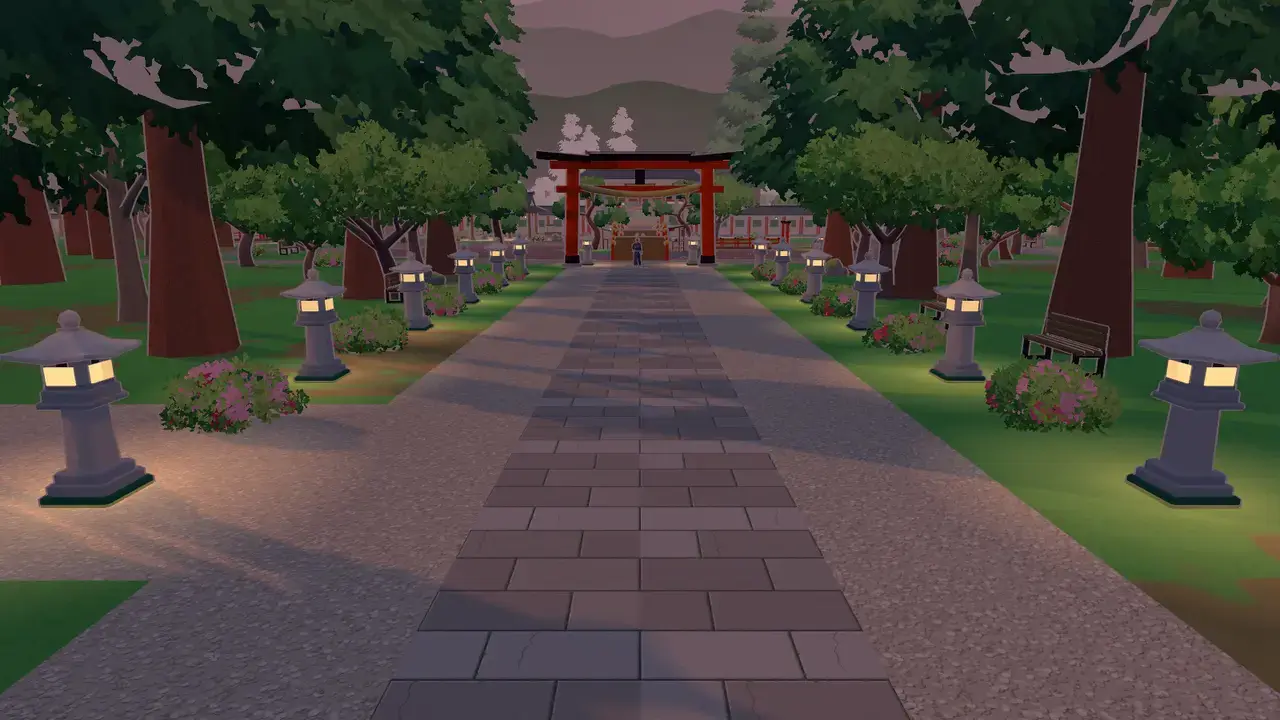
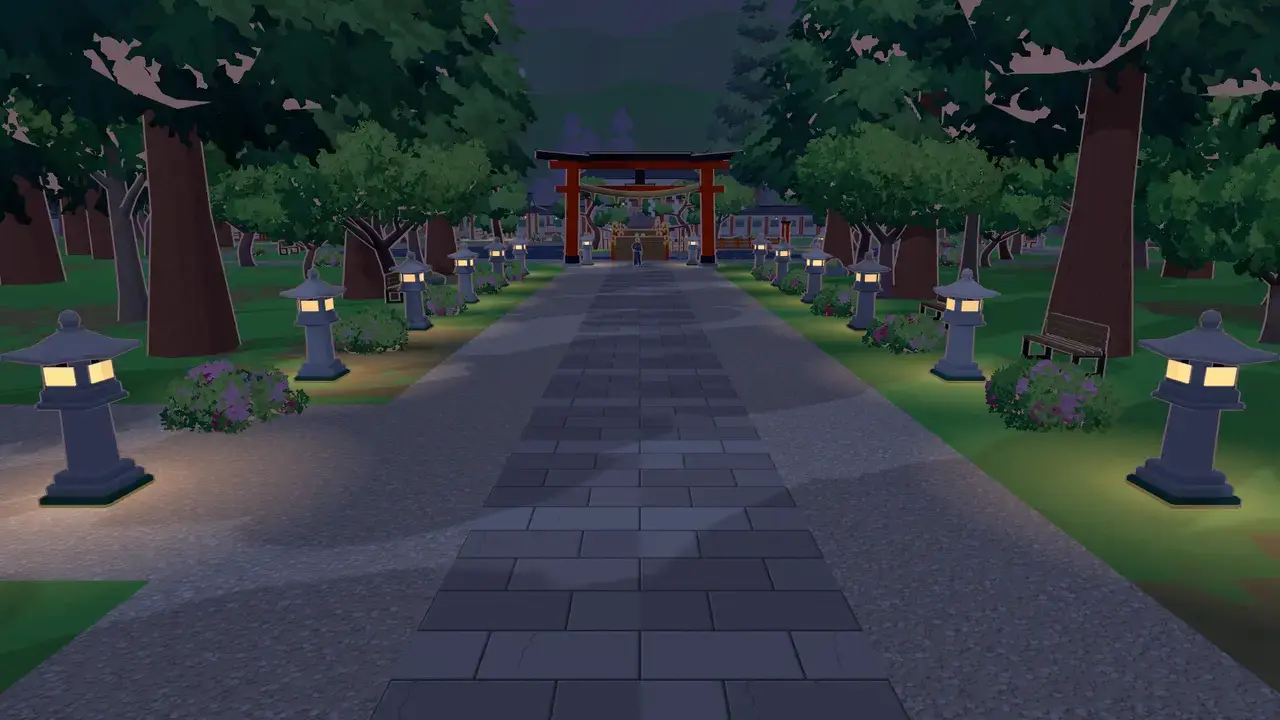
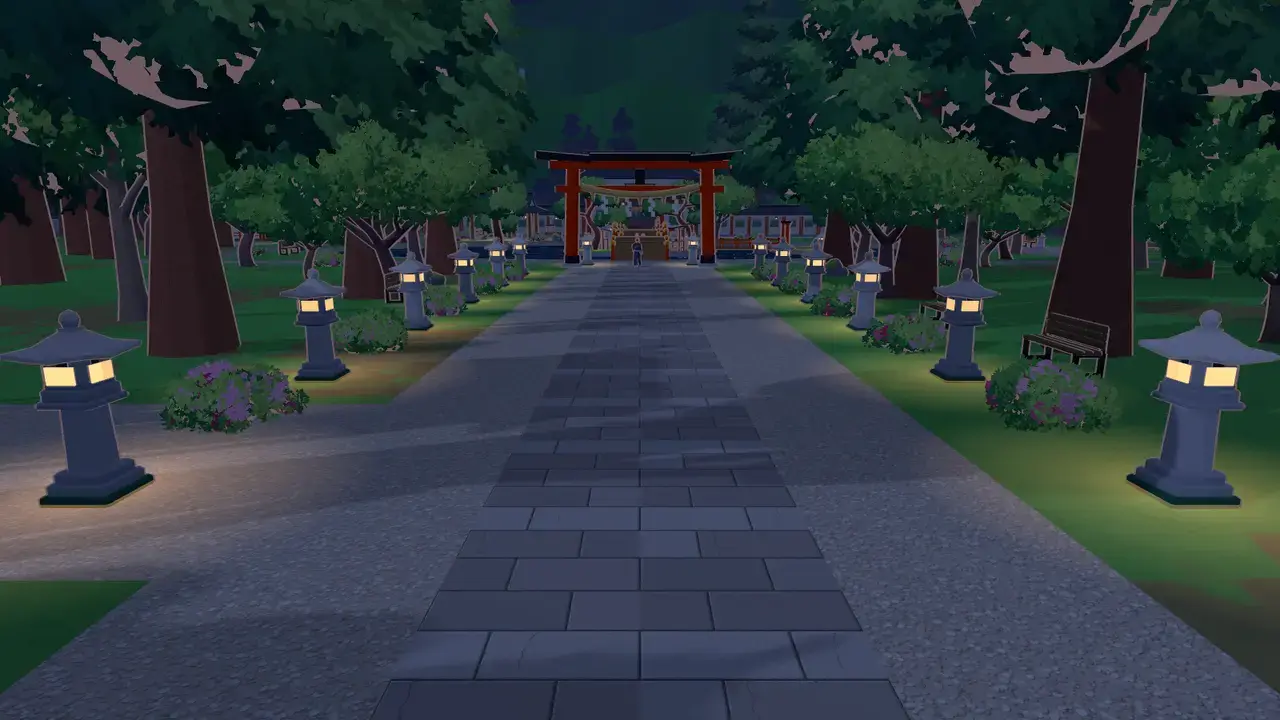
Now in Japan
The shrine's year
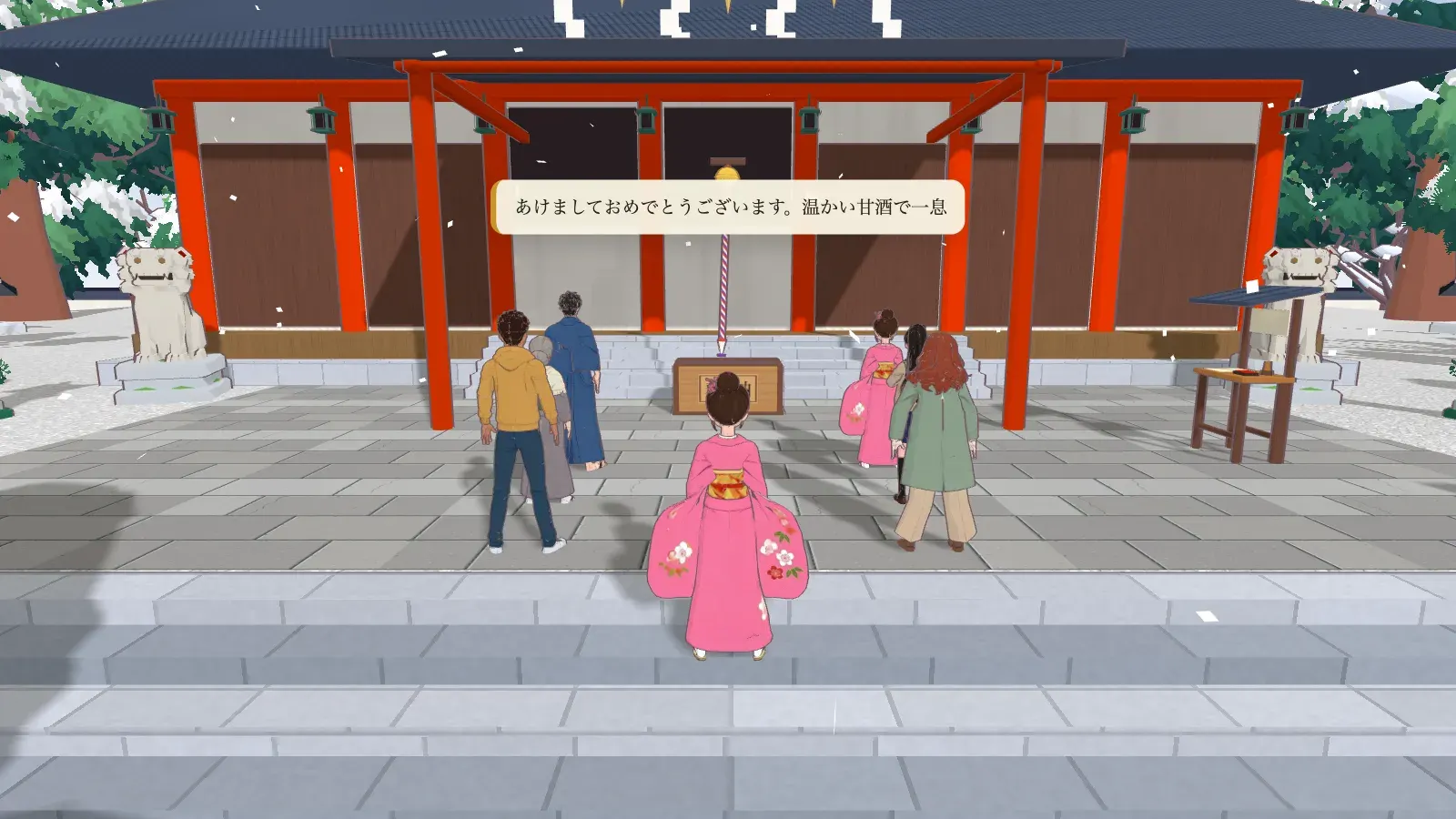
From the lion dance of the New Year to the portable shrine of summer, the yokai parade of autumn and the great purification on New Year's Eve. Come on the day and the festival is on. Kagura is danced every day, and the monthly rite falls on the 1st and the 15th.
January
- Hatsumōde, the first visit of the year
- Shishi-mai, the New Year lion dance
- The 108th strike of the New Year's bell
- Full-moon viewing
- Dondo-yaki
February
- Hatsu-uma at the Inari shrine
- Full-moon viewing
- Setsubun bean-throwing
- Mantōrō, the night of ten thousand lanterns
- Kinen-sai, prayer for the harvest
March
- Full-moon viewing
- Hina-nagashi
April
- Full-moon viewing
May
- Full-moon viewing
- Boys' Day
June
- Full-moon viewing
- Summer purification: the chinowa ring
July
- Tanabata
- Full-moon viewing
- Summer festival and mikoshi
August
- Bon-odori
- Mantōrō, the night of ten thousand lanterns
- Full-moon viewing
September
- Moon-viewing festival
- Full-moon viewing
October
- Autumn grand festival
- Hyakki Yagyō, the night parade of yōkai
- Full-moon viewing
November
- Shichi-go-san
- Tori-no-ichi rake fair
- Niiname-sai, the new rice
- Full-moon viewing
December
- Susuharai, the year-end dusting
- Full-moon viewing
- The New Year's Eve bell (joya no kane)
- Year-end purification and the night rite
January
- Hatsumōde, the first visit of the year
- Shishi-mai, the New Year lion dance
- The 108th strike of the New Year's bell
- Dondo-yaki
- Full-moon viewing
February
- Setsubun bean-throwing
- Mantōrō, the night of ten thousand lanterns
- Hatsu-uma at the Inari shrine
- Kinen-sai, prayer for the harvest
- Full-moon viewing
March
- Hina-nagashi
- Full-moon viewing
April
- Full-moon viewing
May
- Boys' Day
- Full-moon viewing
June
- Full-moon viewing
- Summer purification: the chinowa ring
July
- Tanabata
- Summer festival and mikoshi
- Full-moon viewing
August
- Bon-odori
- Mantōrō, the night of ten thousand lanterns
- Full-moon viewing
September
- Full-moon viewing
- Moon-viewing festival
October
- Autumn grand festival
- Full-moon viewing
- Hyakki Yagyō, the night parade of yōkai
November
- Shichi-go-san
- Tori-no-ichi rake fair
- Full-moon viewing
- Niiname-sai, the new rice
December
- Full-moon viewing
- Susuharai, the year-end dusting
- The New Year's Eve bell (joya no kane)
- Year-end purification and the night rite
Every festival, with its days and hours
The people of the grounds
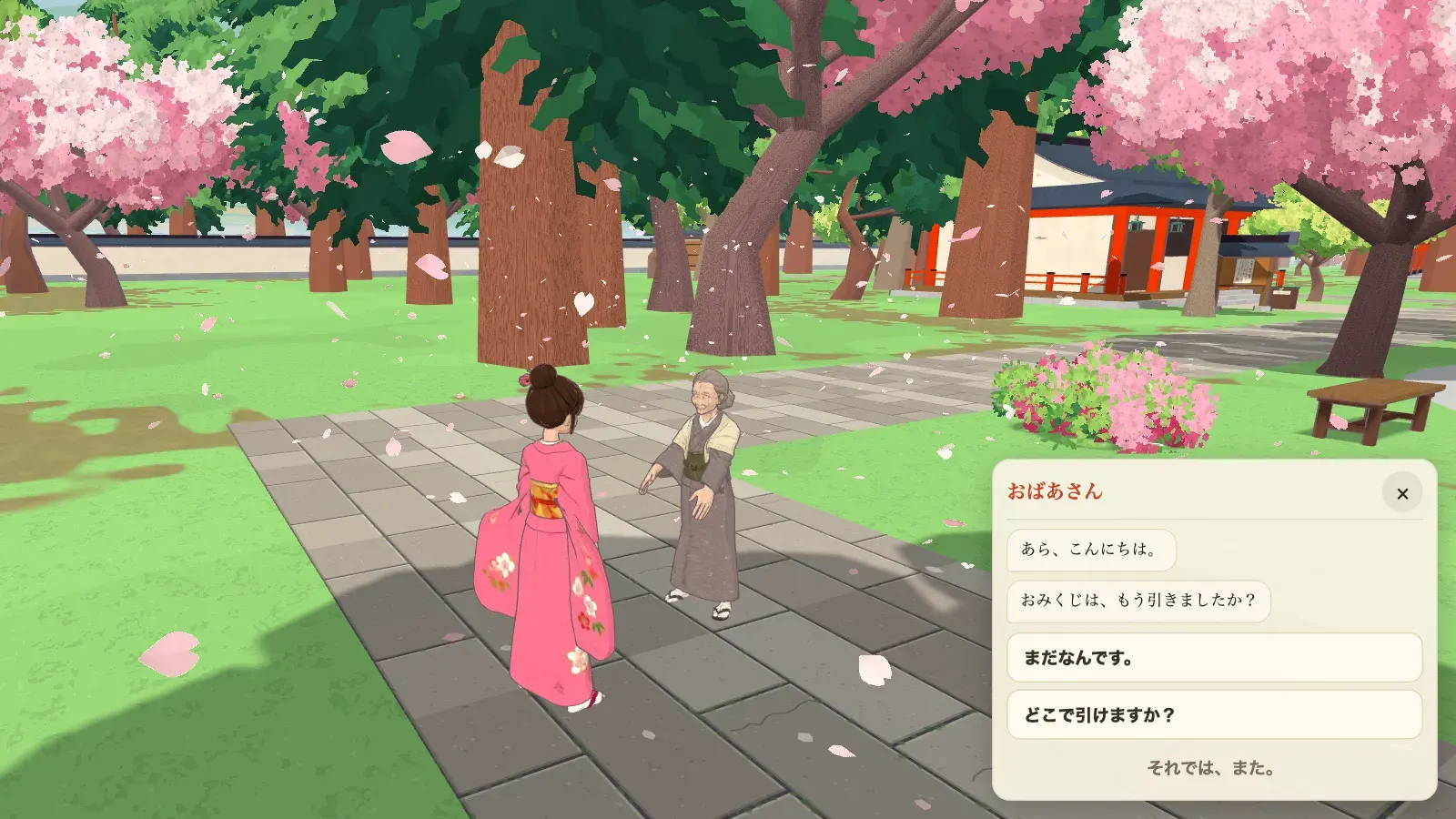
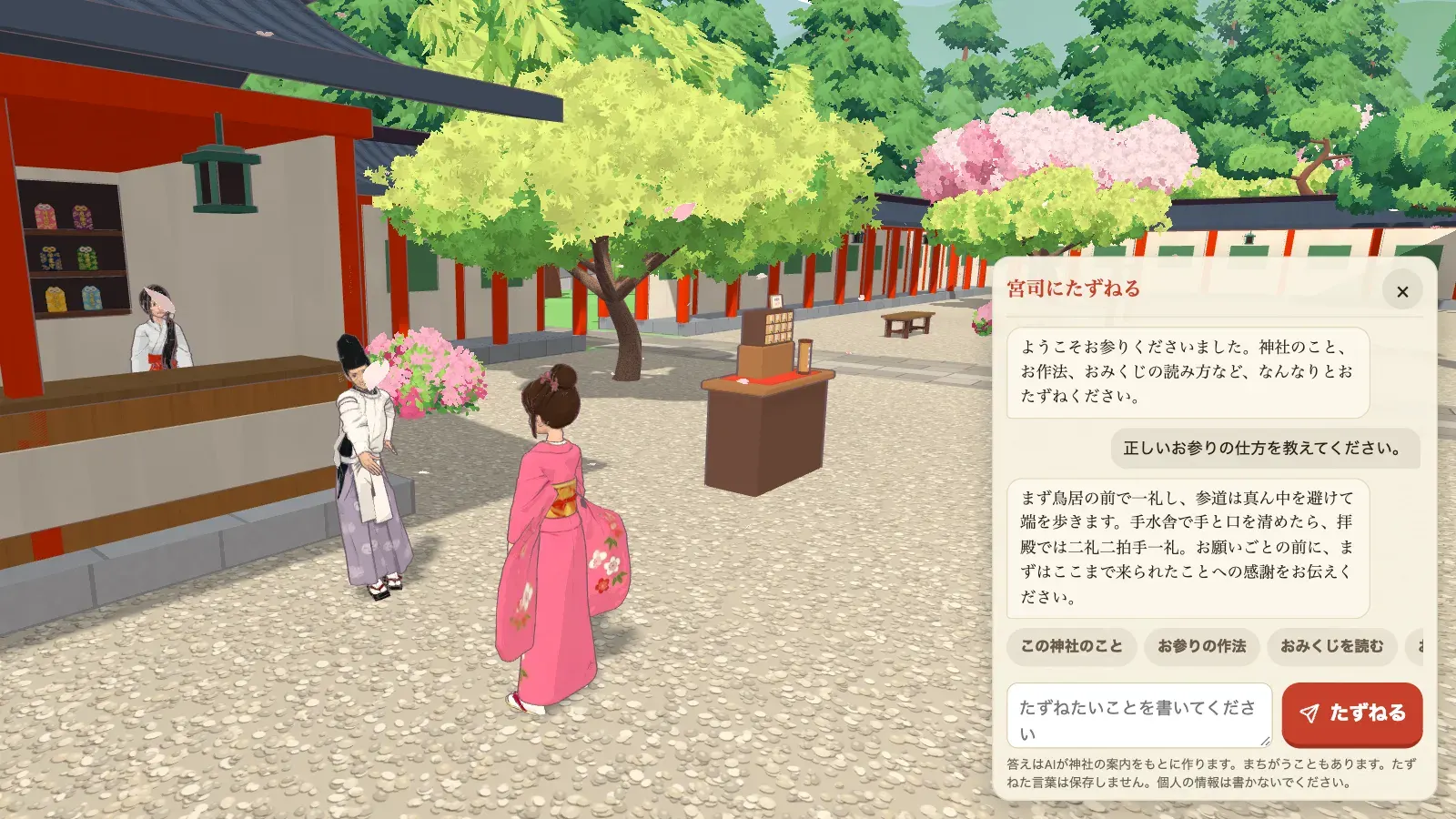
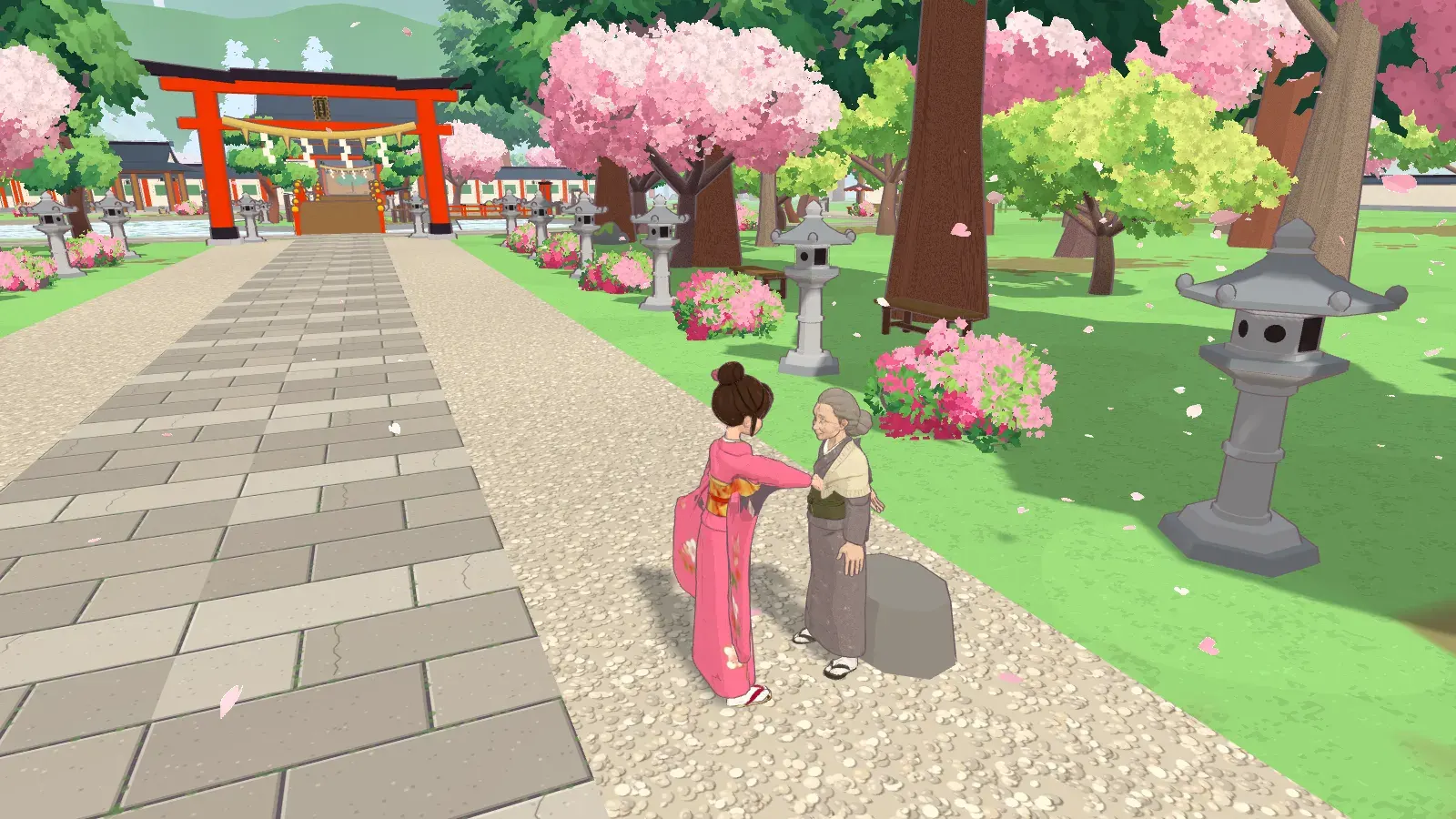
Speak to someone on the approach and they stop and talk with you, in their own voice. At the shrine office the gūji and the miko answer what you ask about the manners or the meaning of your fortune. A miko keeps the amulet counter, sellers keep the fair, and at night the fire watch goes round.
The answers of the gūji and the miko are written by AI. What you ask is not kept.
Small pleasures
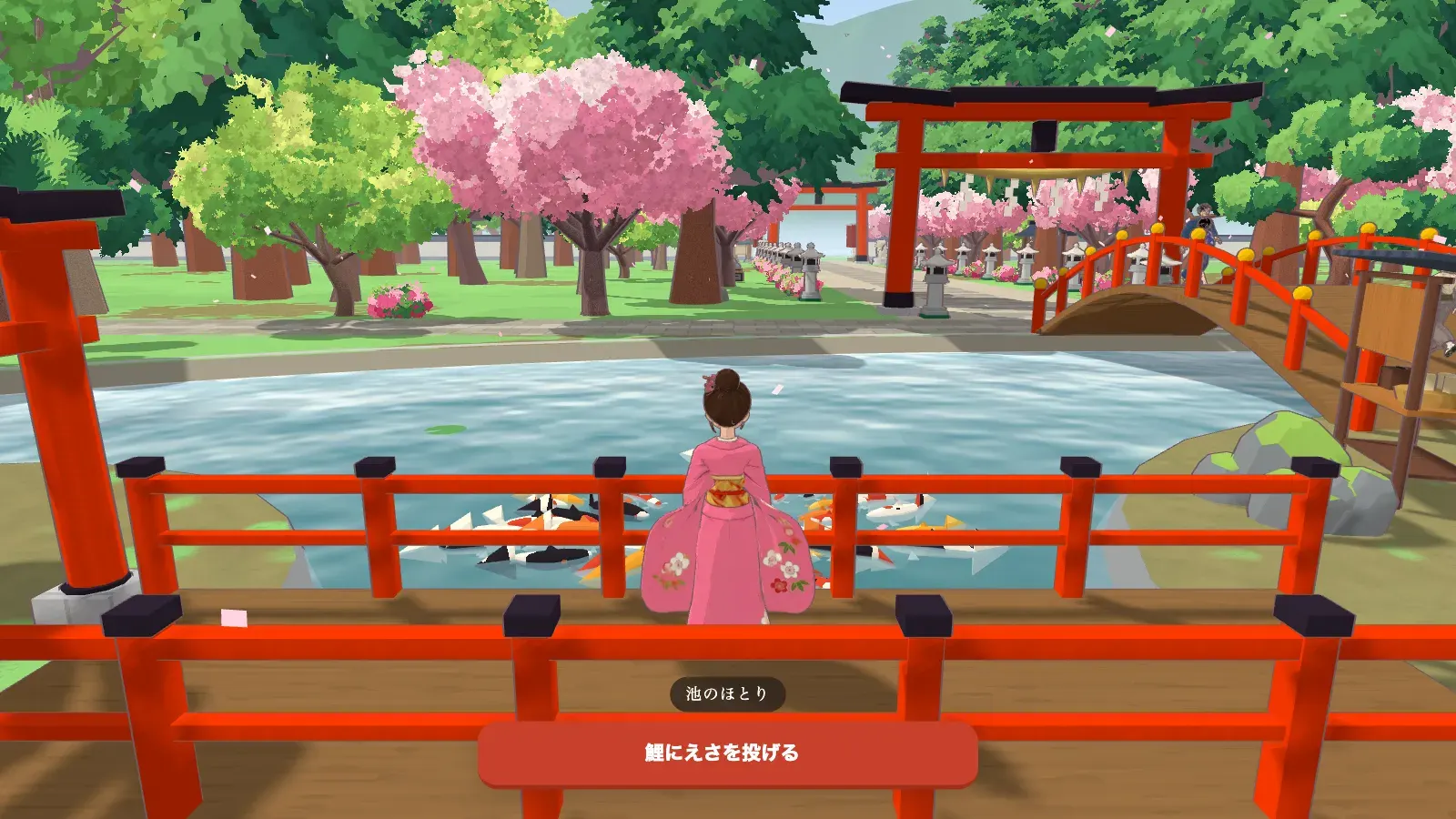
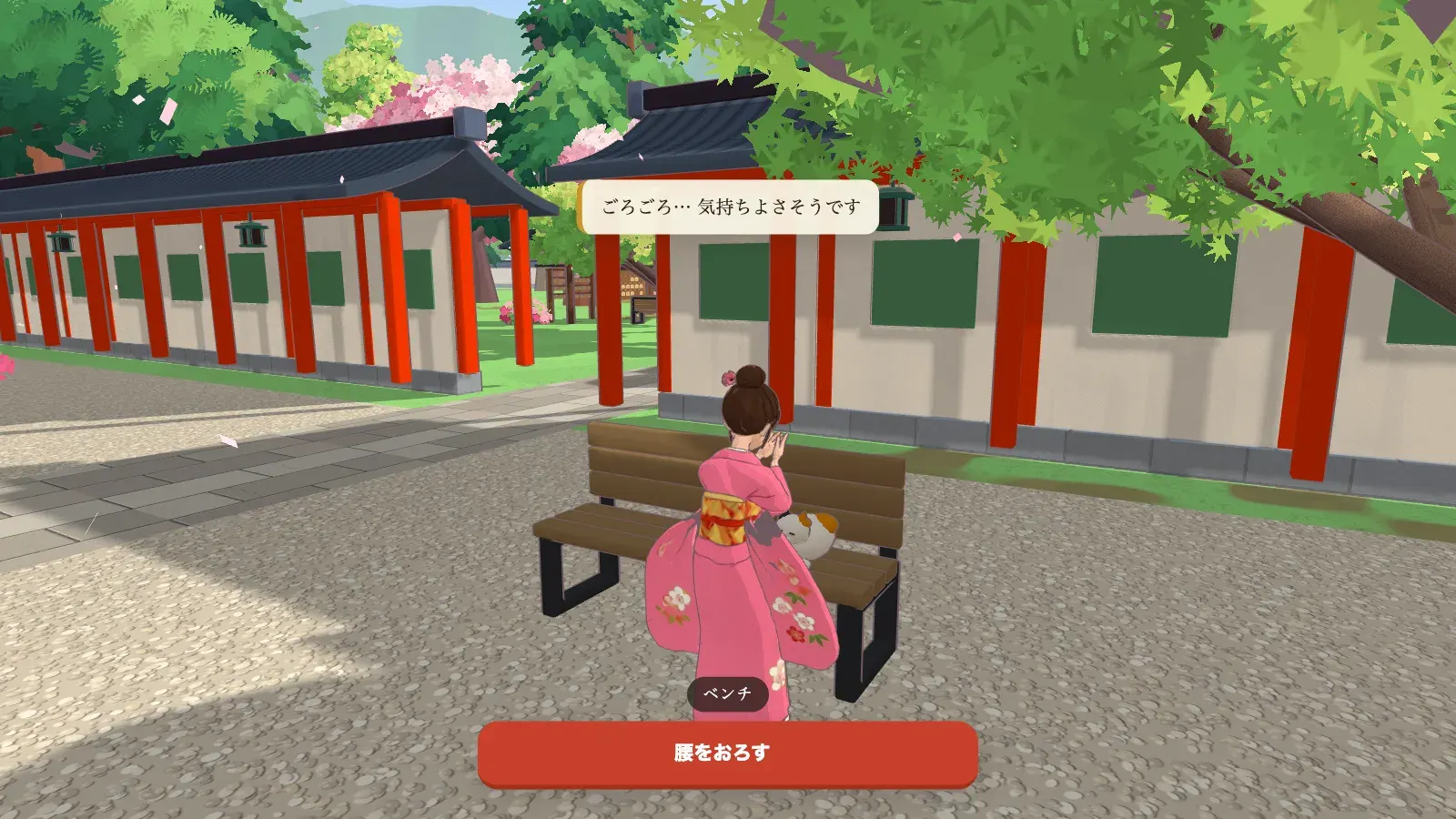
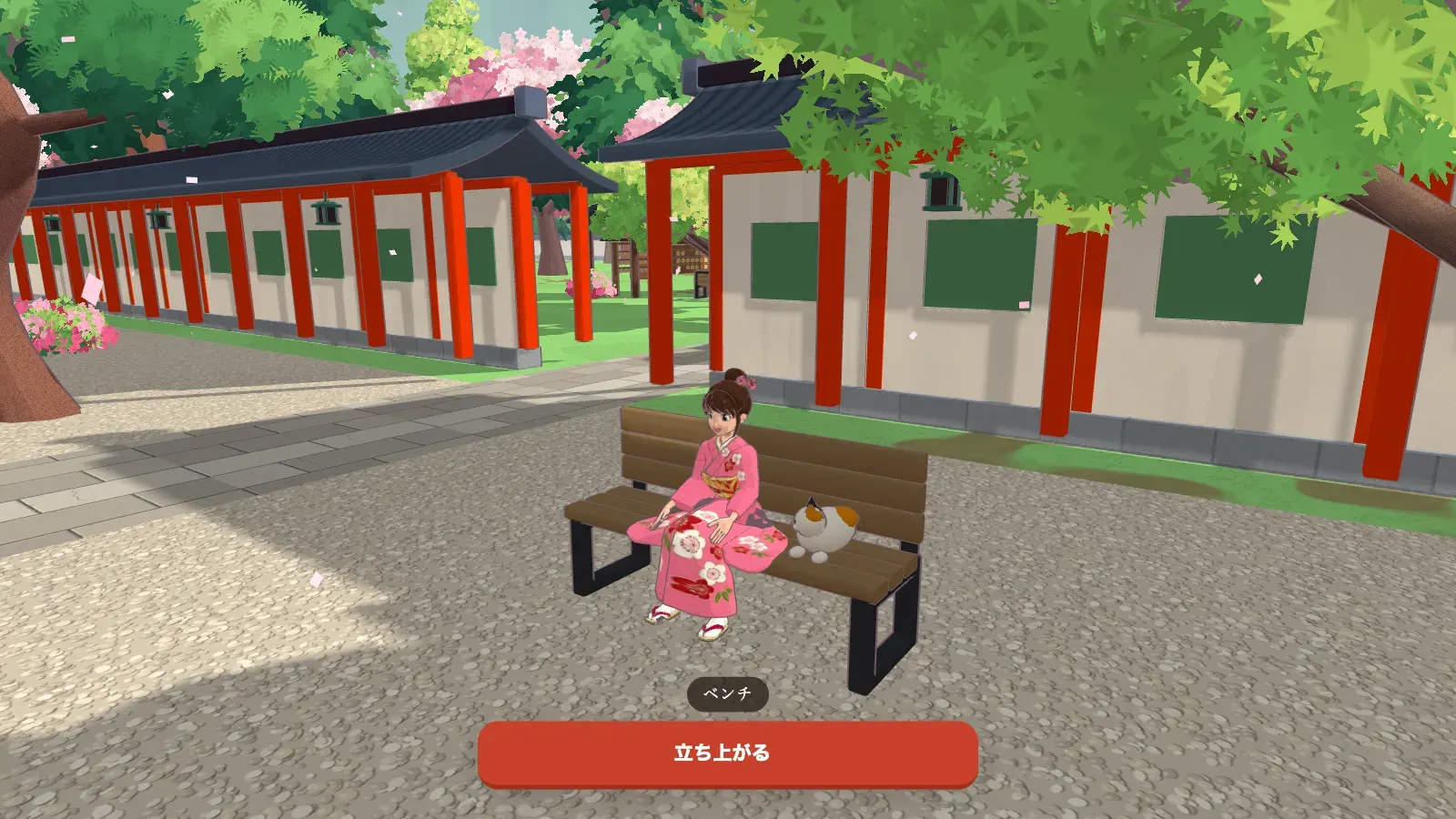
Rest on a bench. Feed the koi and the pigeons. Stroke the cat. Lift the omokaru stone. Sweep the leaves. Throw a coin into the pond from the drum bridge. What you do is kept in your notebook.
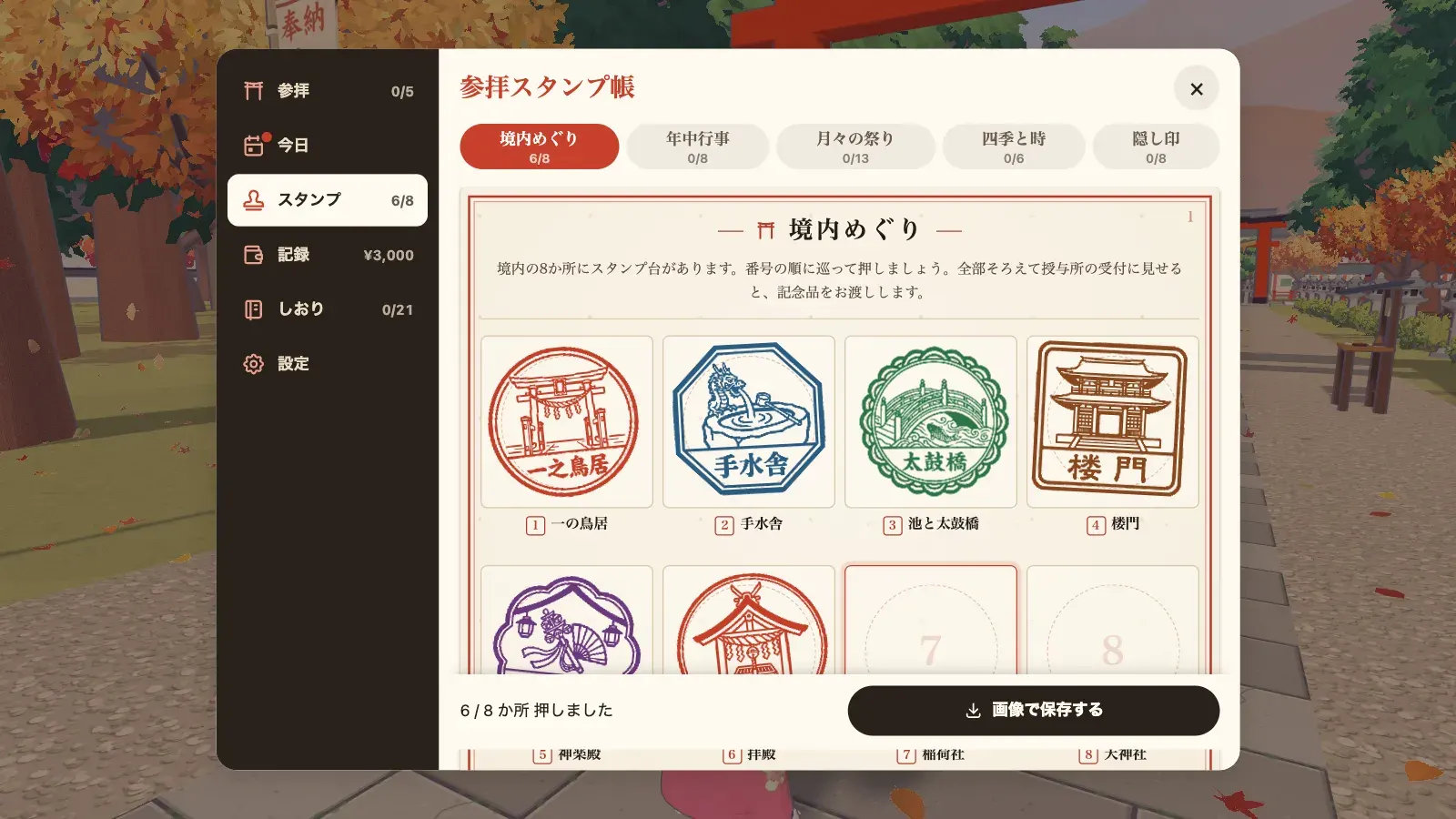
A stamp book, and good deeds nobody sees
Press the stamps of the grounds into your book one by one. Some can be pressed only on a festival day or at a certain hour, others must be found by their clue. Fill a page and the shrine gives you a keepsake.
Bring a lost wallet to the reception. Help someone up. Walk a lost child to the shrine office. There is no marker and no list: only those who notice can do these good deeds, and they stay in your diary and in four numbers, virtue, faith, purity and bonds.
Fair stalls and keepsake photos
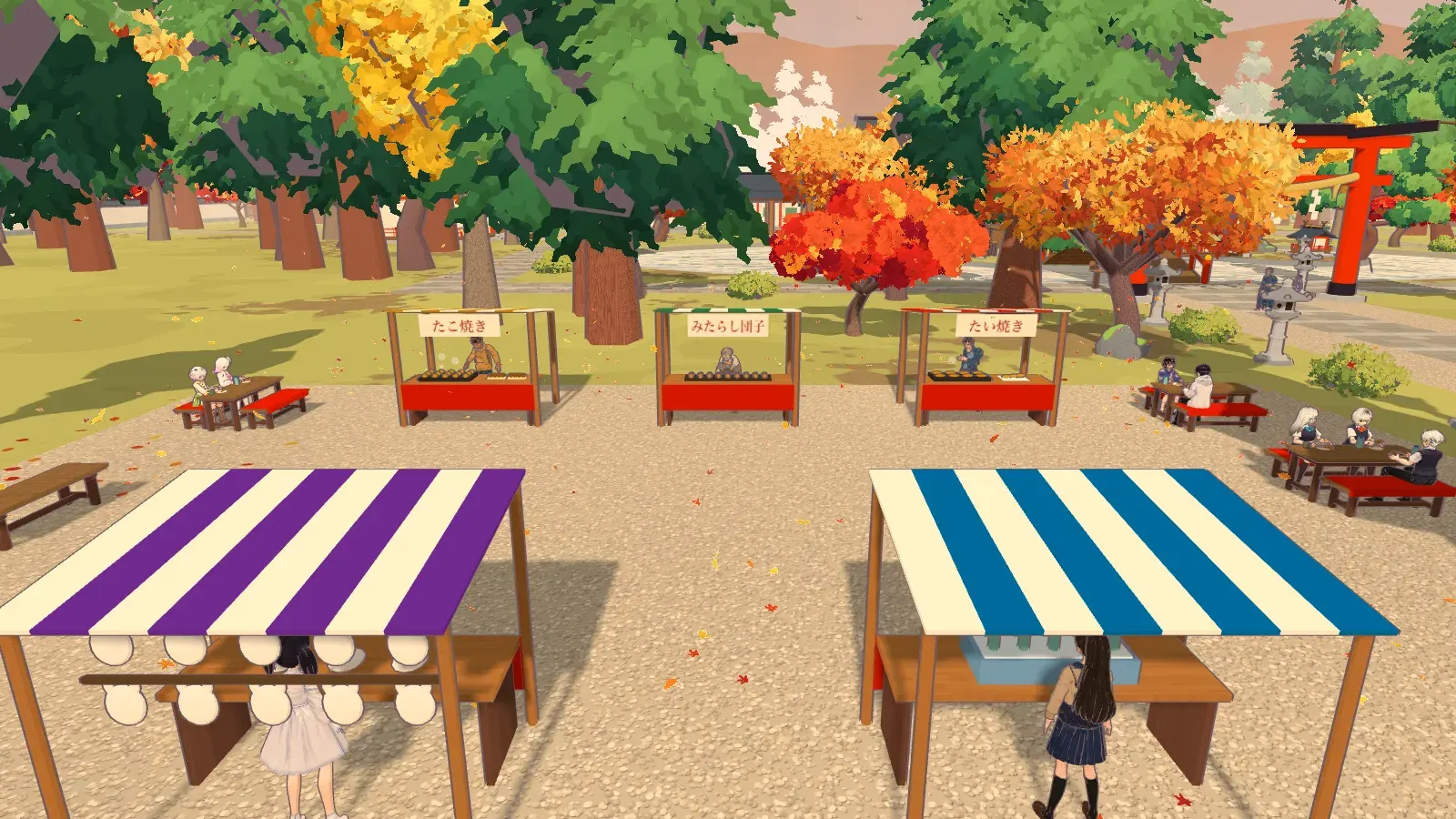
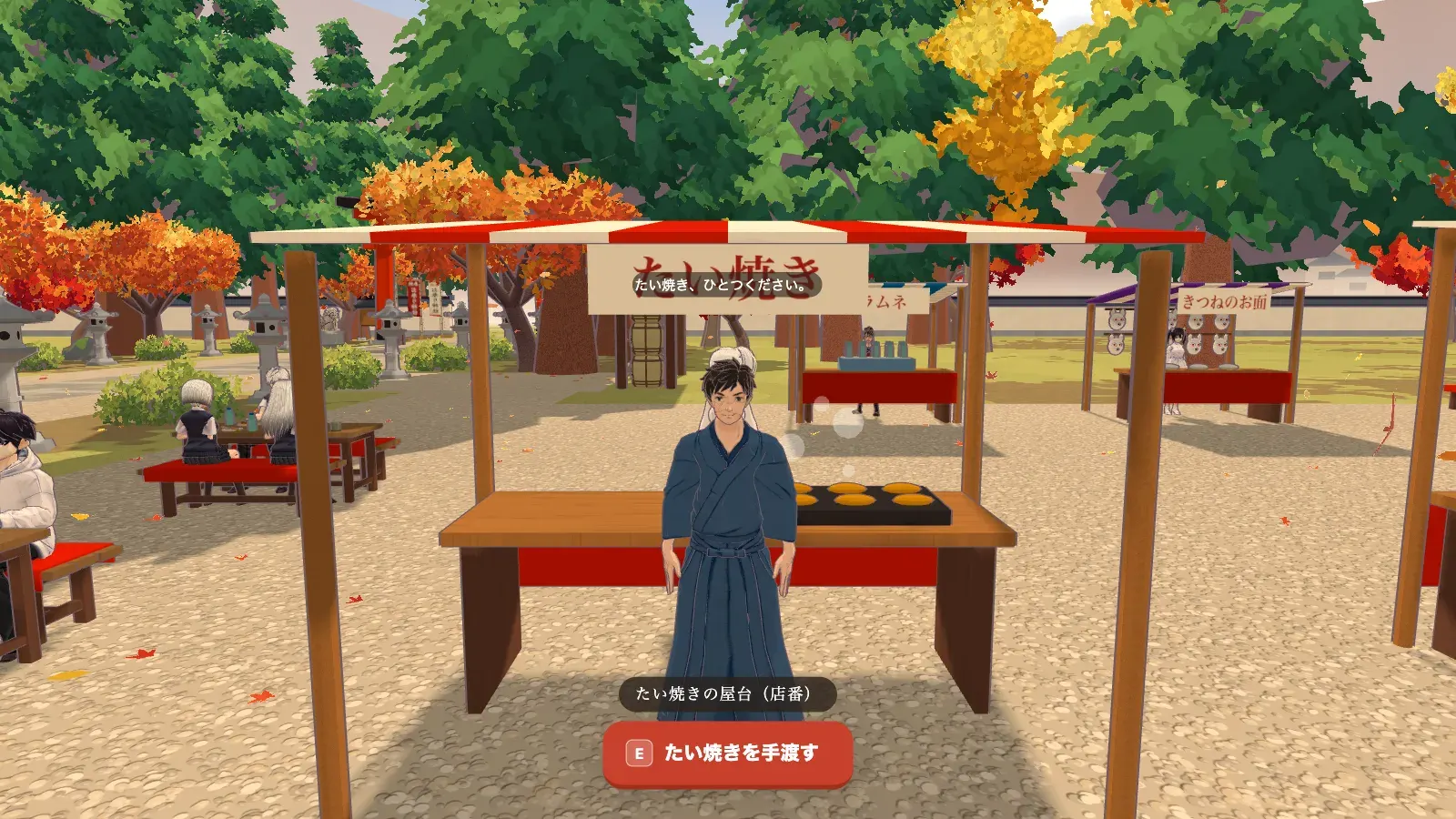
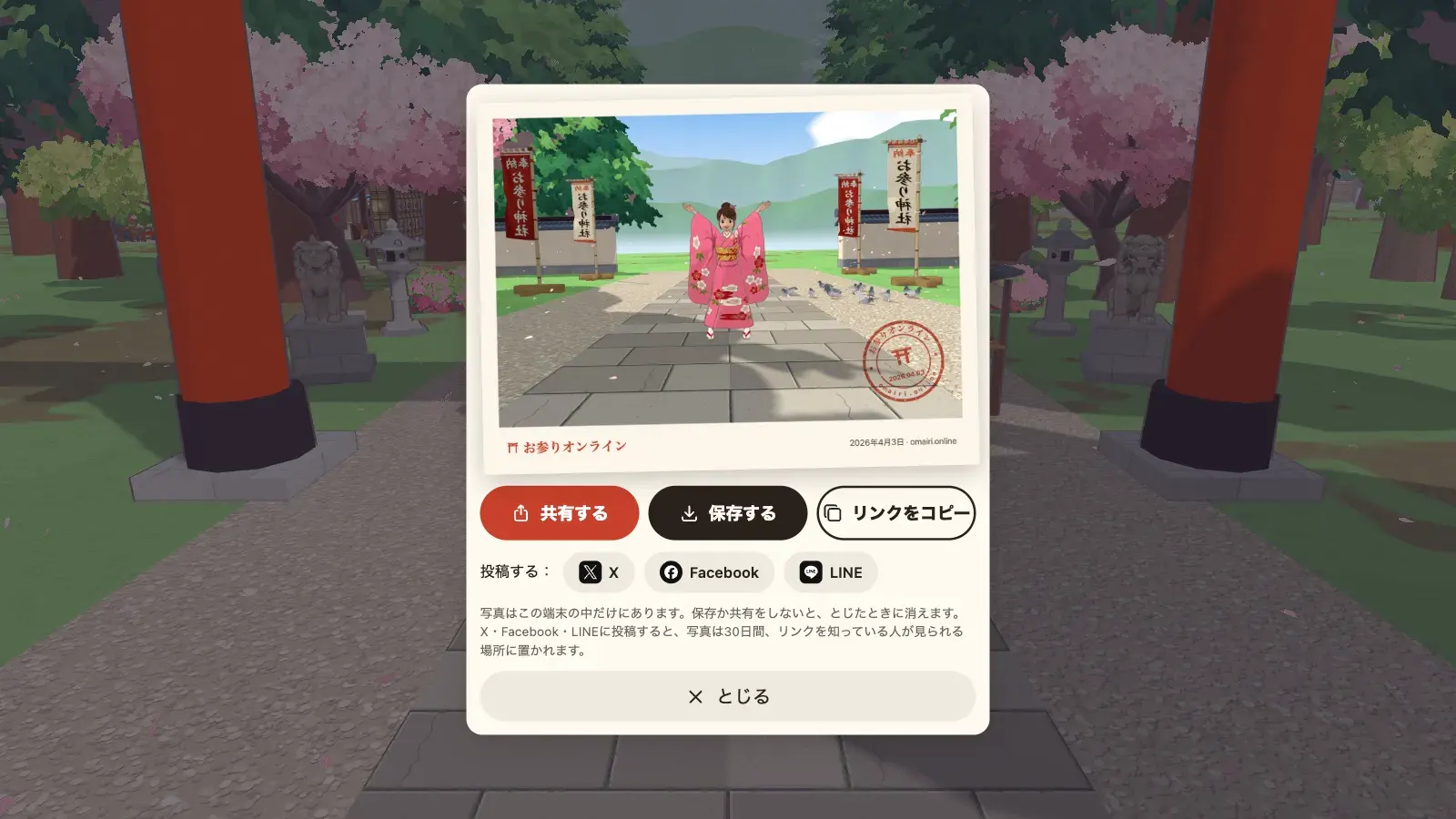
On fair days the stalls are up and the food tables are always busy. You can keep a stall yourself: call out to passers-by, hand over what they buy and take your commission. Take a photo as a selfie or ask someone to take it; counted in with "ichi, ni no, san!", it carries the shrine's seal and can be posted to X, Facebook or LINE.
Anyone, in any form
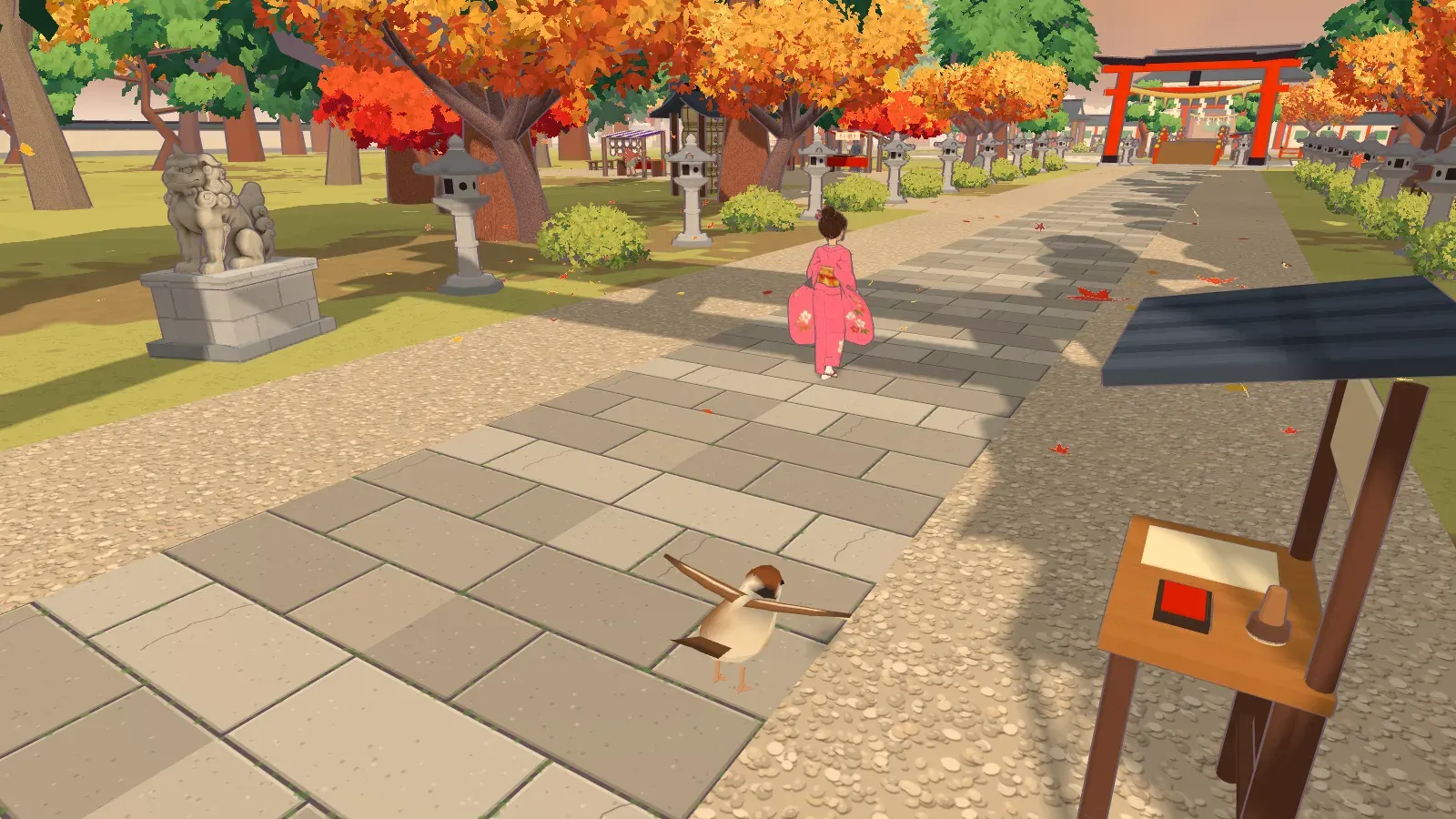
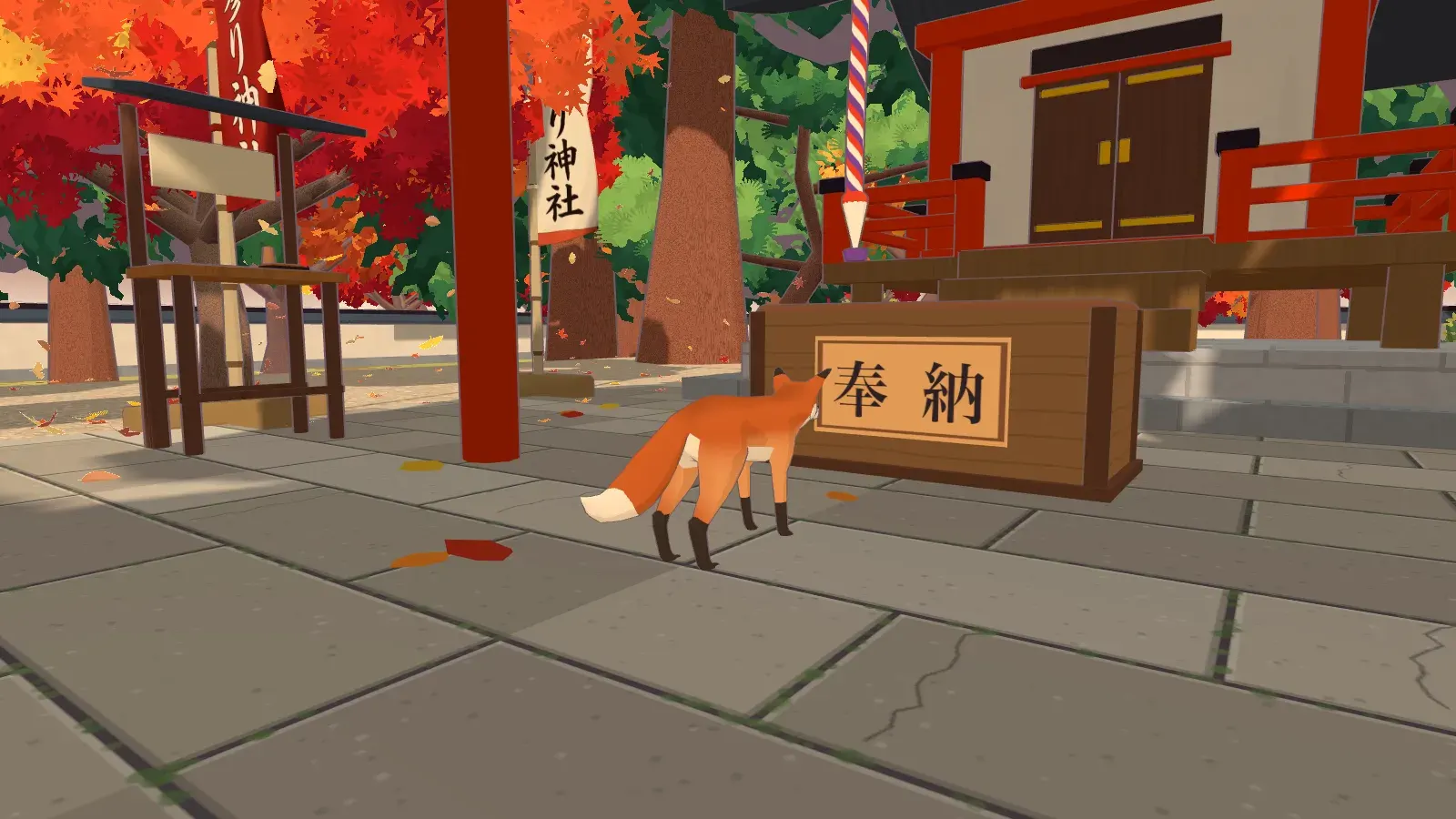
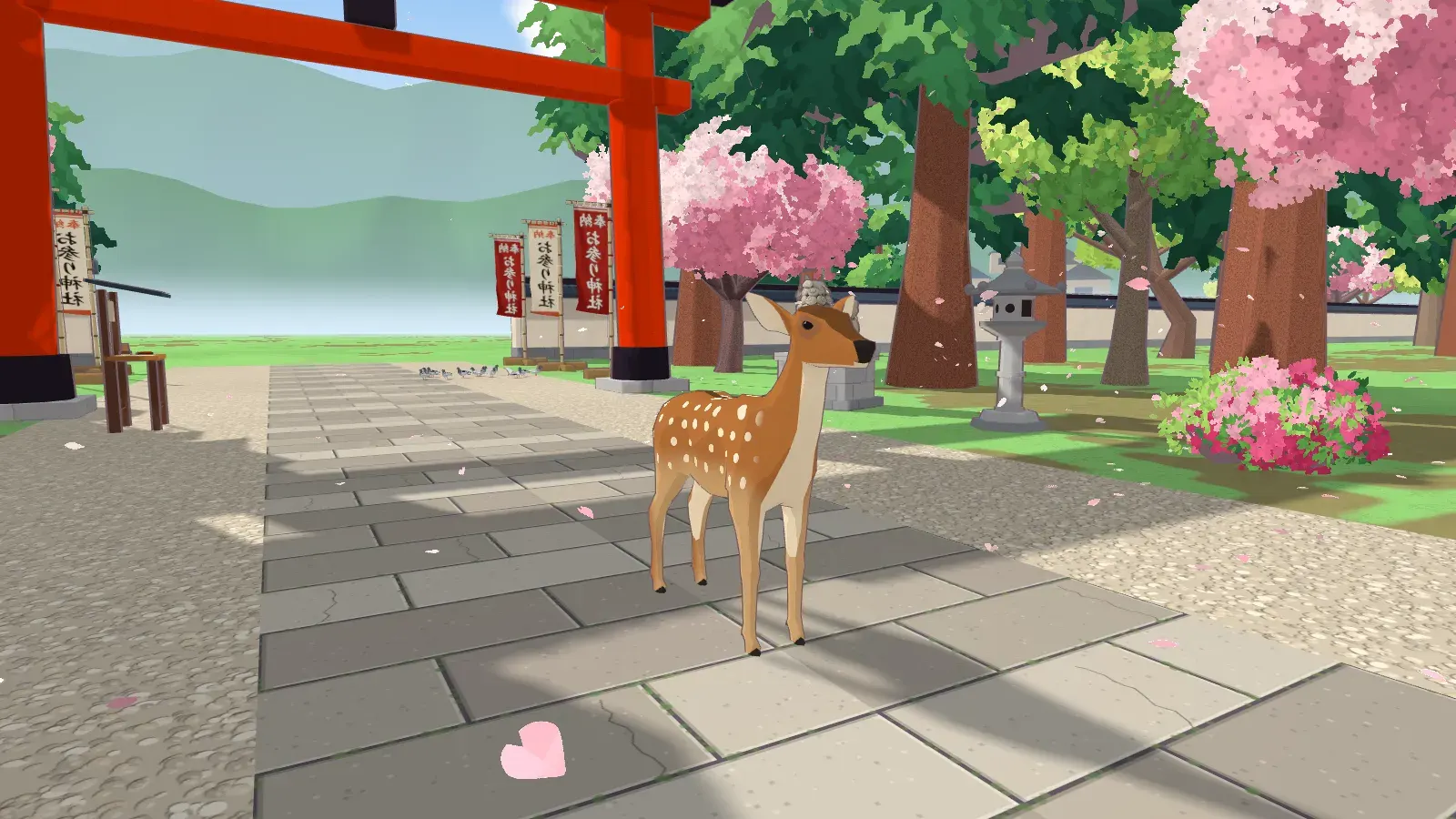
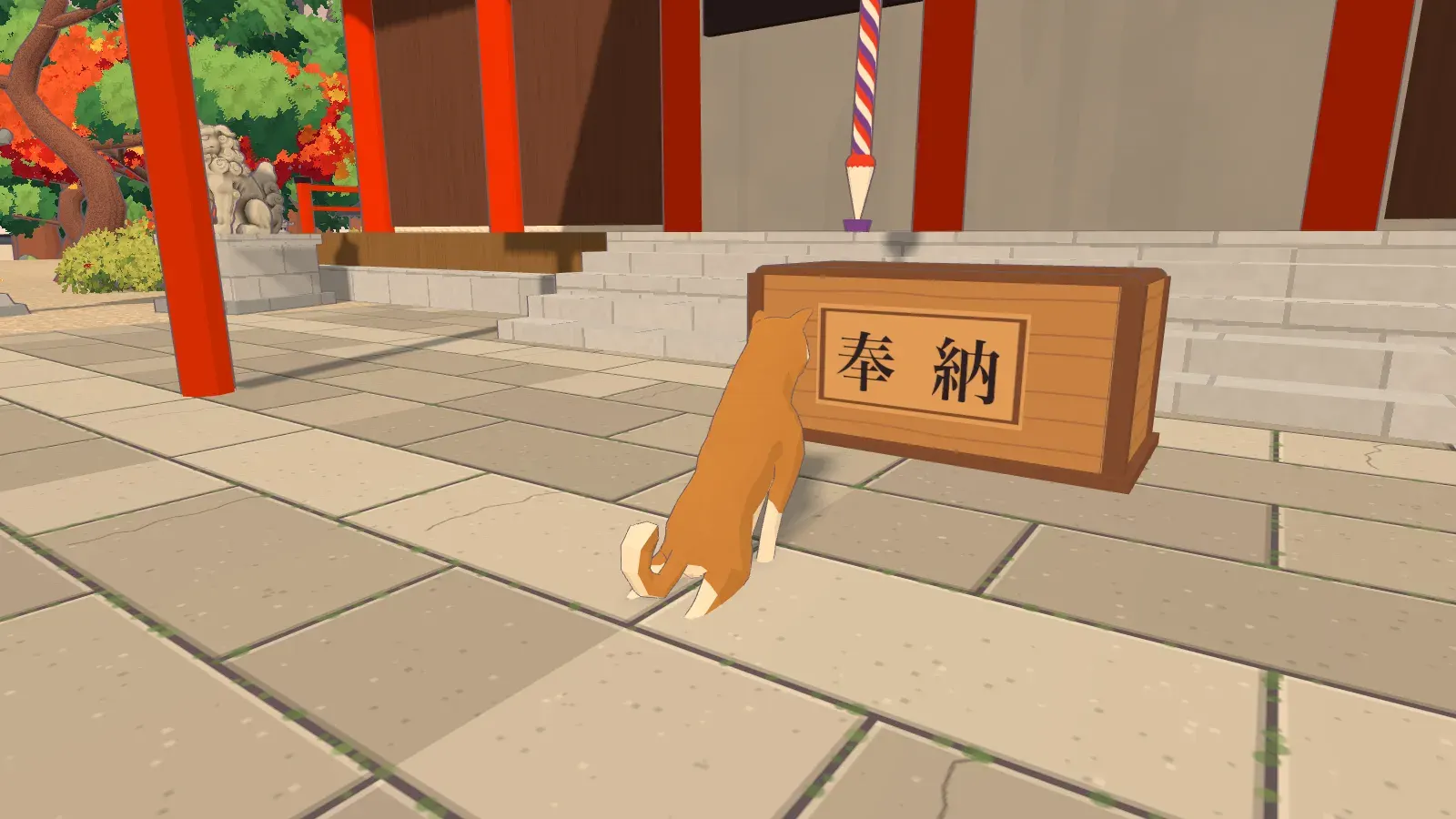
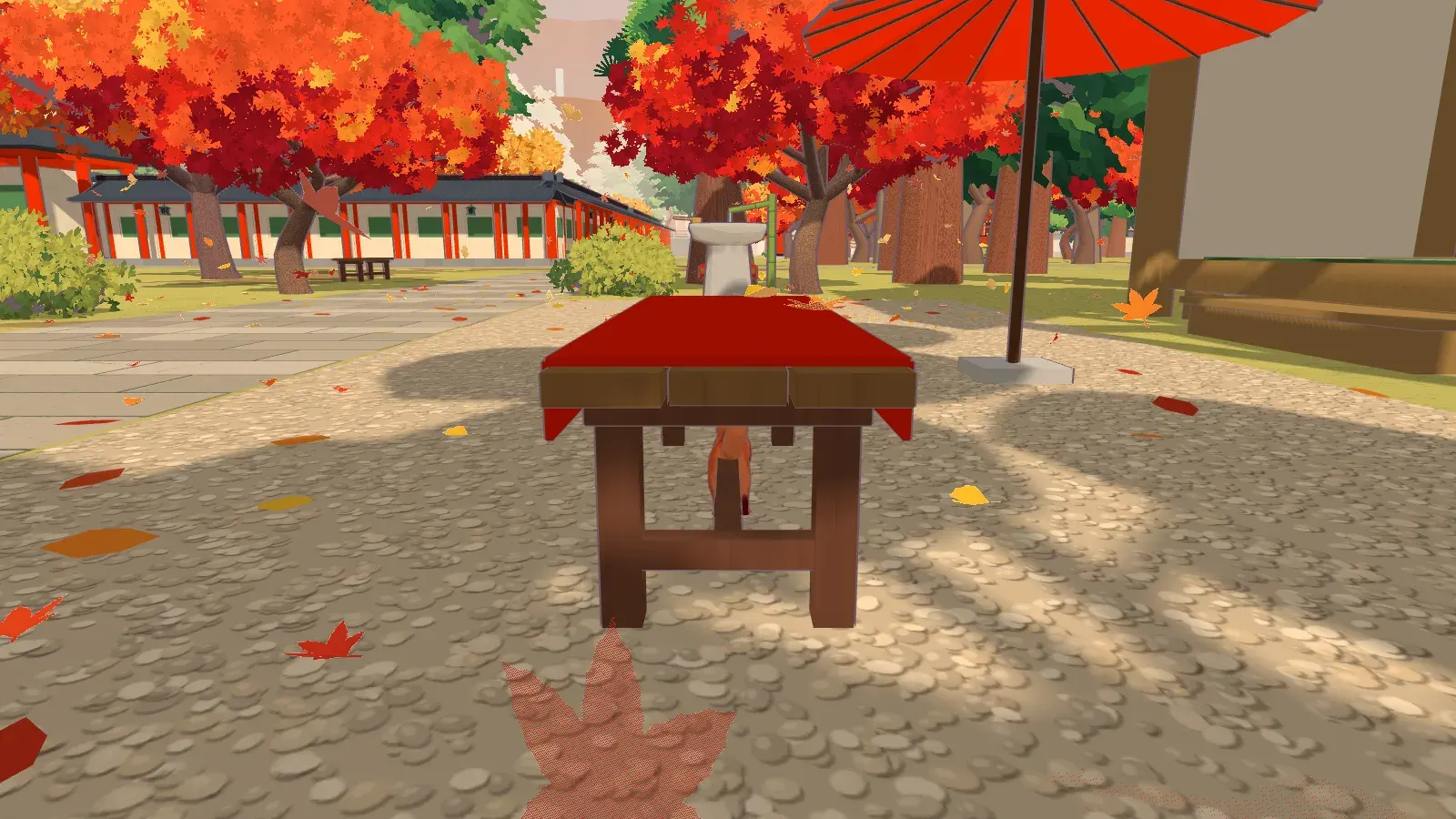
Besides a person, you can come as a cat, a dog, a fox, a sika deer, a bird or a koi. From the roofs, from under the water, from down by the ground, the same shrine looks different. In any form you can bow at the torii and pray in quiet.

Visiting together
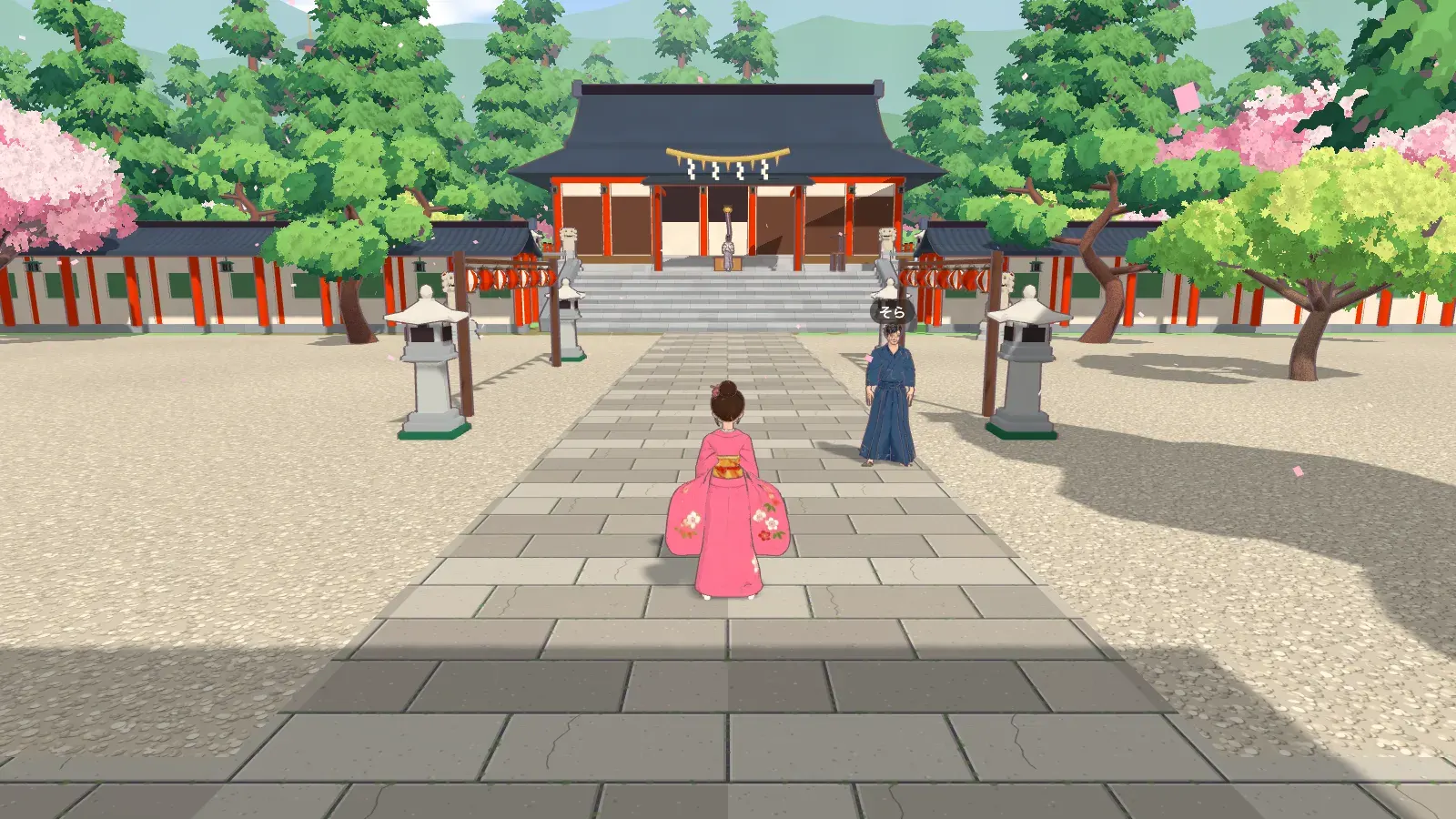
You see other visitors walk, bow and hang their ema, and hear their coins and the bell. Only so many may be inside at once; when it is busy you wait your turn outside the torii. There is no chat between visitors: the shrine stays a quiet place.
Grounds that remember
Fallen leaves pile up and the miko sweeps them. A coin that missed the box stays on the paving, and the fortune you tied is still there next time.
How to begin
No sign-up needed. Visit as a guest, straight away.
 1
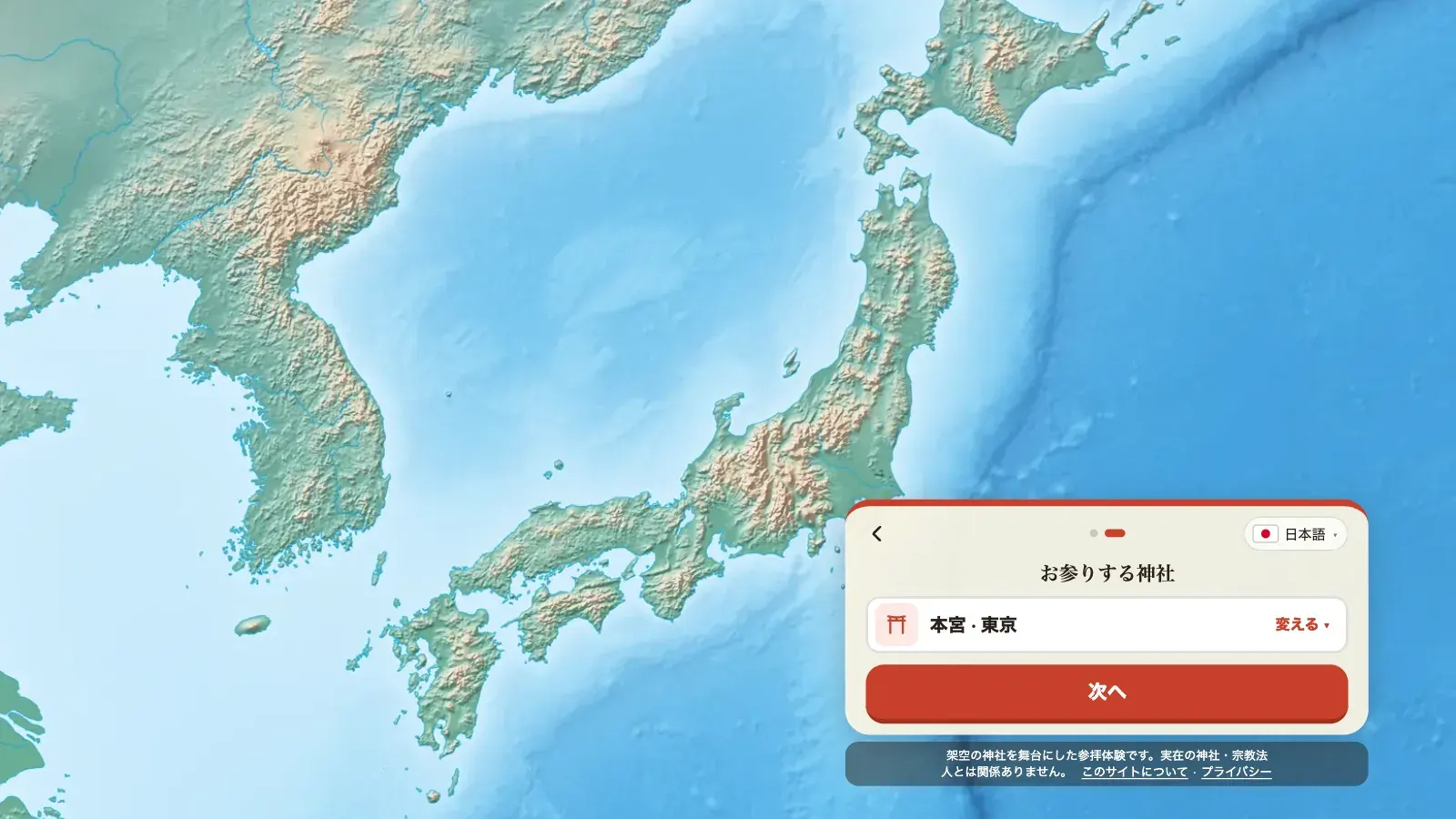
Choose a shrine on the map of Japan
See how many are visiting now, and how many wait outside the torii.
 2
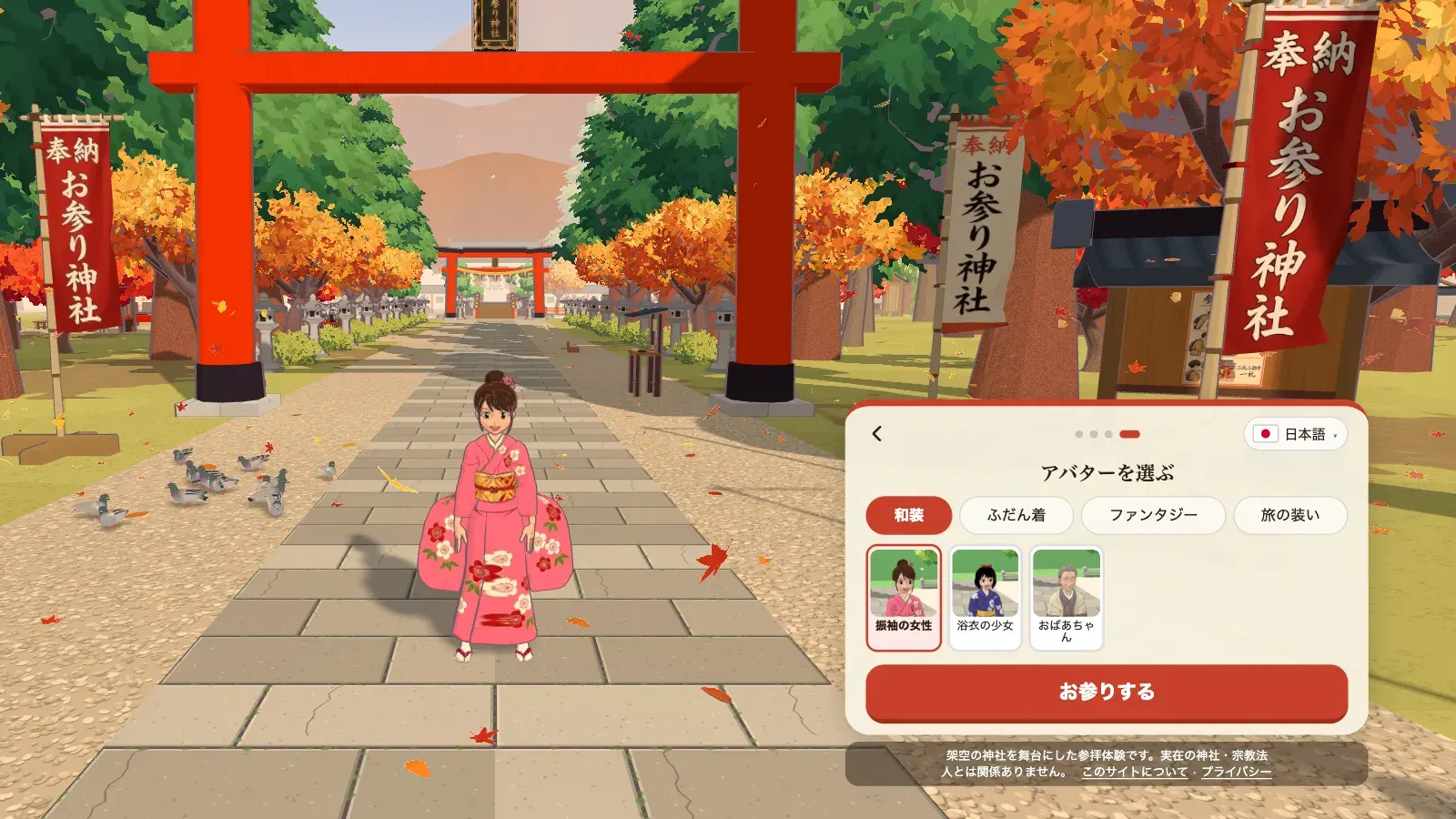
Choose who you are
Stay a guest, or sign in with Google, LINE or Apple to carry your notebook to another device.
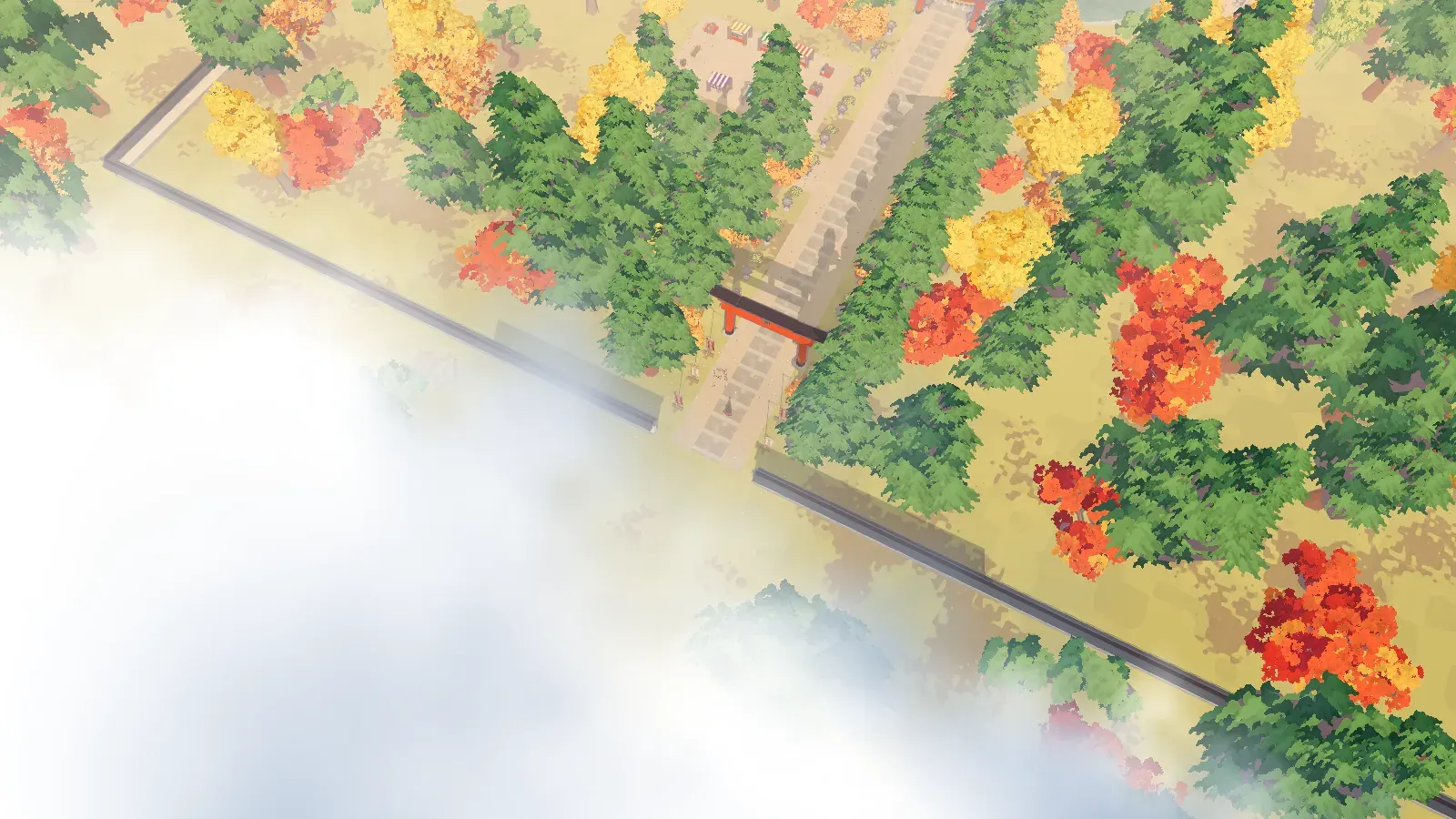 3
Through the clouds to the grounds
You come down from the sky and stand before the first torii.
In 13 languages
The game speaks 13 languages, for those who live in Japan and those who visit it. Choose one and the game opens in it; you can change it any time inside the game too.
- Free
- Nothing to install
- No sign-up
- 13 languages
- Phone and computer